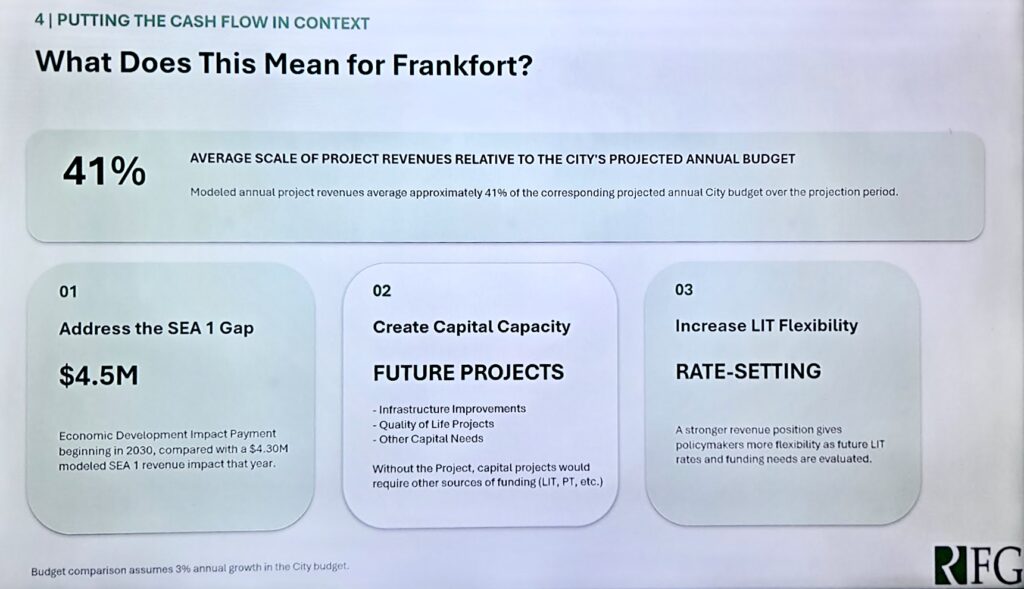
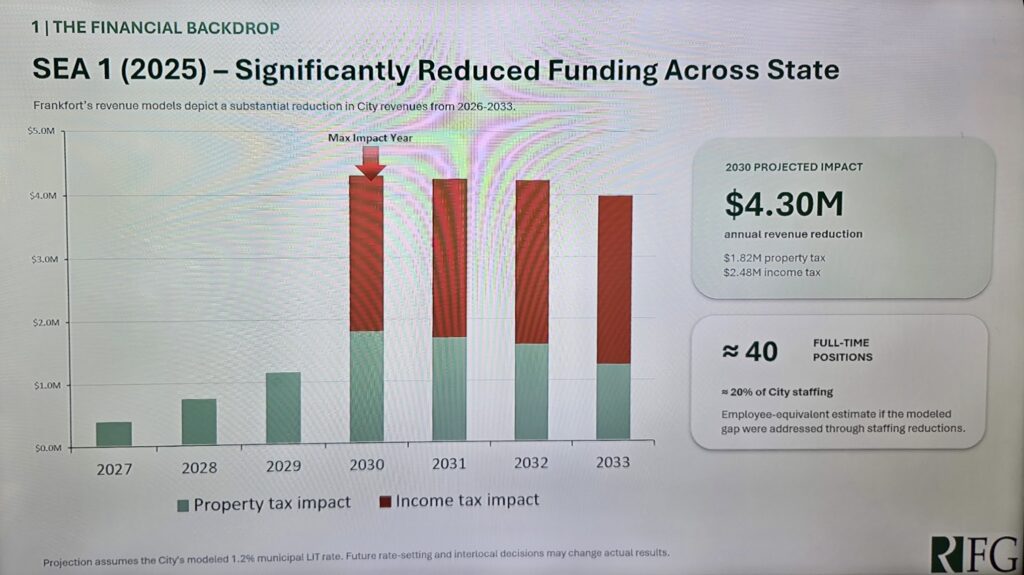
FRANKFORT — DataOne has made its first $1 million payment to the City of Frankfort and plans to give $10,000 to the local Salvation Army before the end of the year, CEO Charles-Antoine Beyney said in a 20 minute interview with WILO and Boone 102.7 FM on October 27th.
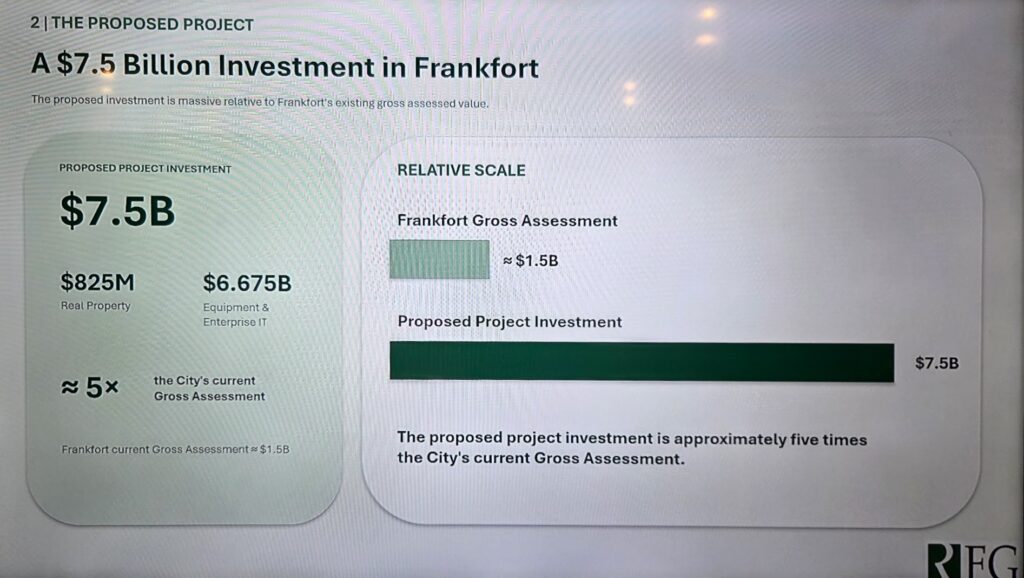
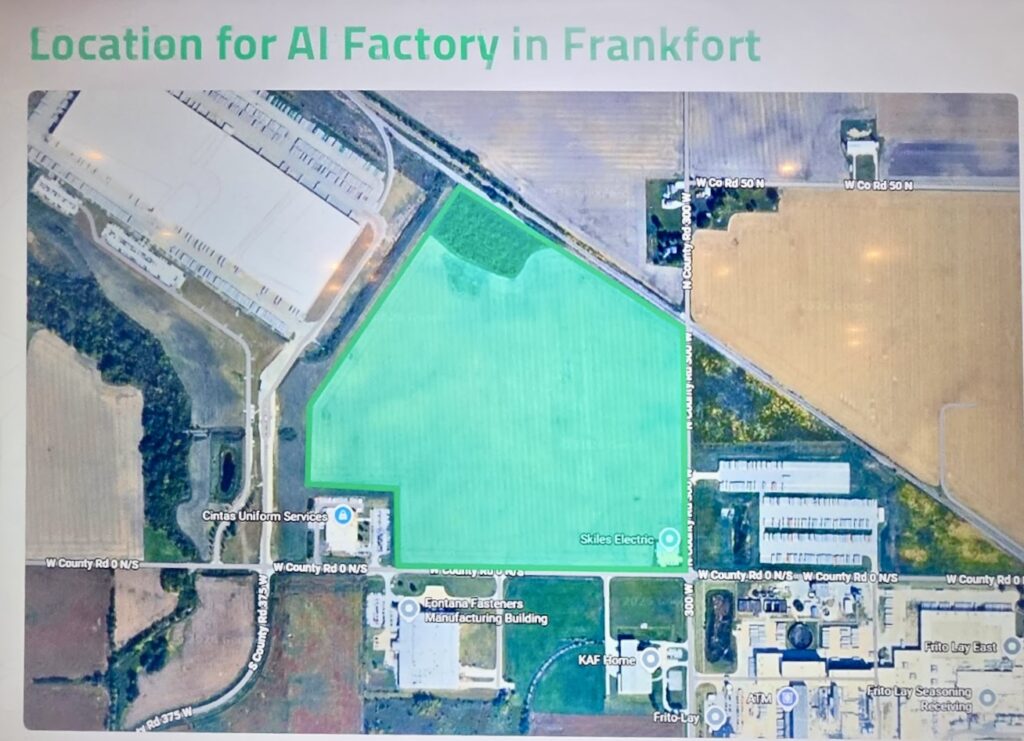
Beyney spoke with WILO and Boone 102.7 FM Party Line host Shan Sheridan by phone from Dubai. He said DataOne still hopes to break ground on its proposed $7.5 billion “AI factory” at the Logix Innovation Campus by the end of this year or early next year. Several approvals and public hearings still stand between the company and a building permit.

“The first milestone is due tomorrow, but we already have paid our first million dollar to the city, which is very good for all the local services,” Beyney said.
The Frankfort Common Council voted 5-2 on Sept. 28 to approve a community enhancement agreement with DataOne. The agreement calls for $1 million within 30 days of signing, another $1 million when a building permit is issued, and $1 million more when a certificate of occupancy is issued. City officials have said the agreement is not a building permit.
Salvation Army donation

Beyney said the company is working with the Salvation Army ahead of Christmas.
“We are trying to [send] some cash to these folks so they can help the ones that need it the most as well before the end of the year,” he said. “So we’re going to give away $10,000 to the Salvation Army.”
Height variance and drainage next
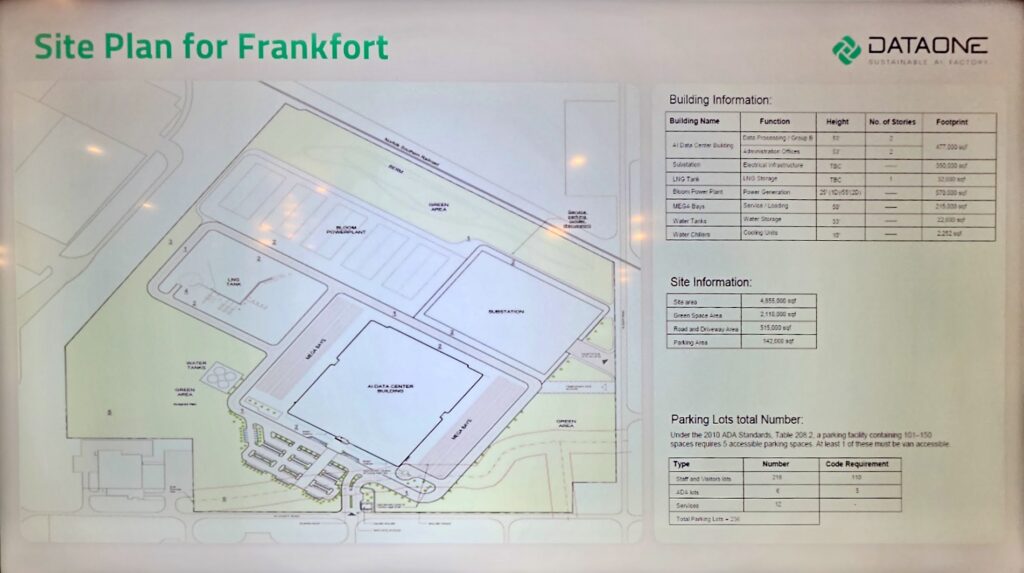
Beyney said the next step is a request for height variances. He said local code allows buildings up to 35 feet. DataOne wants the main building to be 55 feet and its liquefied natural gas tank to be about 50 feet. He expects a board to hold a public hearing on the request “in a few weeks.”
“This is just a height variance, so you are not voting yes or no for a project,” Beyney said.
He said the bigger decision will come when DataOne asks for building permits. Before that, the company also needs drainage approval showing its design can handle heavy rainfall under city code. He counted at least two public hearings still to come before a final building permit.
Beyney repeated his promise that DataOne’s studies will be made public. He said they will cover noise, water and “every single pain point” people have raised about data centers. He said he wants residents to have time to review the studies and respond.
The council-approved agreement requires a noise study, an environmental impact study and a traffic impact assessment before DataOne can break ground.
Lessons from New Jersey
Beyney said he has built more than 20 data centers in Africa, South America and Europe. He said DataOne learned a hard lesson at its project in Vineland, New Jersey. There, local authorities challenged the company’s use of temporary gas-powered generators during construction.
“In Frankfort, we’re not going to be using any gas gensets whatsoever at any moment in time,” Beyney said. He said construction power will come from the electric grid through a substation that is already in place.
He said the finished campus will use natural gas fuel cells, which make electricity through a chemical reaction instead of burning the gas. He said the facility would need only a minor air permit and would produce less pollution than a logistics center. He did acknowledge that the fuel cells produce “a decent amount of CO2.”
Beyney said DataOne is investing “tens of millions of dollars” of its own money in technology to capture carbon dioxide and turn it into something useful, and that the company is “very close” to doing this at scale. He said the company’s goal is net-zero emissions and net-zero water use within a few years. He also hinted that the Frankfort facility might use no water at all, though he gave no details.
“It’s not because this is asked by the regulator or by anyone else than us,” he said.
Vineyard roots
Beyney grew up in a small village in France, where his family grows grapes. He said a vineyard teaches patience: vines take about five years to produce and about 10 to produce quality fruit. “You are building a vineyard not for you, but for your children, for your grandchildren,” he said.
He said farmers in France and the U.S. face the same struggles, and that only very large operations do well. He also said he has lost friends to illnesses he blames on farm chemicals. “It’s not because of environmental pollution, it’s because of agricultural pollution,” he said. He said he has heard similar stories in Frankfort.
Asked whether he would bring his wine to Frankfort, Beyney said he would, once he finds an importer that lets him do it legally.
Closing the interview, Beyney spoke to Clinton County residents: “If we are here at that moment in time for Frankfort, it’s maybe a greater design than ourselves.”
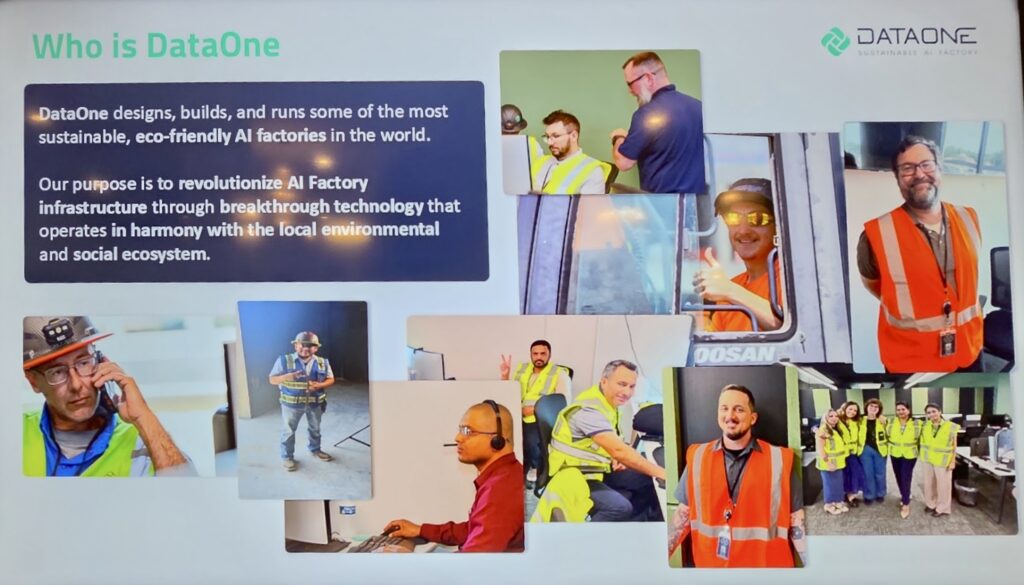
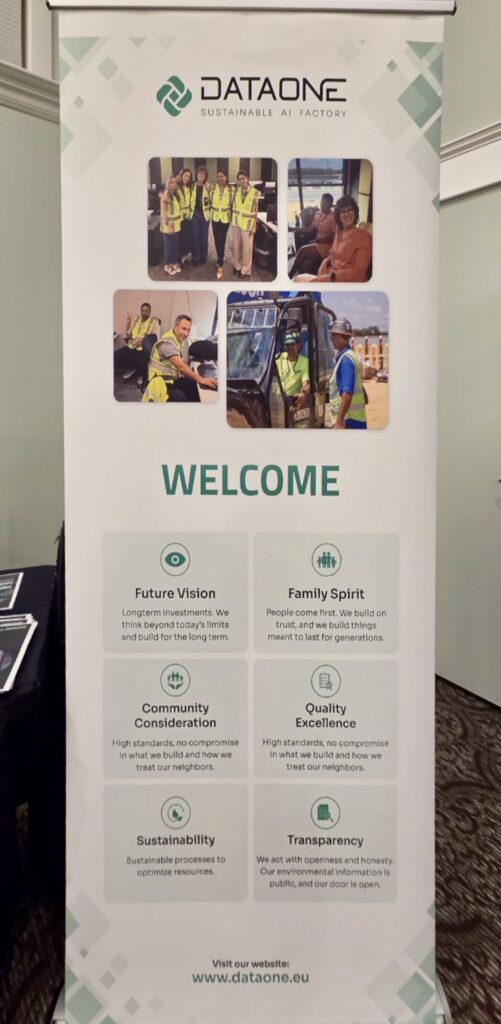
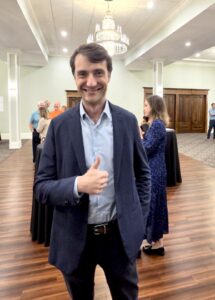
Publishers Note: The following photos were taken at the DataOne Openhouse on September 21 from 5pm 8pm and September 22 from 10AM to 1PM. Photos are made available here to provide context for the interview heard today on Party Line.