FRANKFORT — DataOne, a data center developer with operations in the United States and France, is asking the City of Frankfort to approve an “AI factory” campus at the Logix Innovation Campus, a project the company values at $7.5 billion.

According to the company’s news release, the development would span 115 acres and include an 800,000-square-foot facility on land already zoned for light industrial development. The company says it would create significant construction employment and approximately 200 permanent on-site jobs once operational, with a stated goal of hiring within Frankfort.
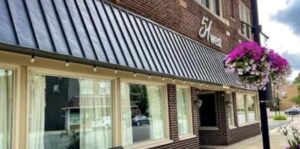
Residents will get their first face-to-face opportunity to question the project team next week. DataOne will host two walk-in open houses at 51 West Event Center located at 51 West Clinton St., Frankfort:
- Monday, Sept. 21, from 5 to 8 p.m.
- Tuesday, Sept. 22, from 10 a.m. to 1 p.m.
No appointment is required. The company says each session will have staffed booths on campus design, jobs, water, energy, noise, lighting and local tax benefits.
Co-founder and CEO Charles-Antoine Beyney said in an interview that he expects to attend both sessions, along with engineers and outside experts who worked on the site design. “I’m bringing all the best engineers, all the best experts we have on every single one of these critical points,” he said.
Water, Power, Noise, Light, Taxes:
The company’s stated commitments include:
Water: The facility would use a closed-loop cooling system, with total consumption of approximately 22,000 gallons per day. DataOne says that volume would keep it out of the top 20 water users served by Frankfort Municipal Utilities, and that no water would be drawn from local wells.
Energy: Power would come from a combination of on-site fuel cells and grid electricity delivered through IMPA, the city’s existing supplier. Beyney said the full build-out is designed for 475 megawatts, and that roughly 150 megawatts of the grid portion would come from a solar plant paired with battery storage. He said the site would use fuel cells rather than gas turbines — a choice he described as about five times more expensive — because they run quieter and produce fewer pollutants. Natural gas would be stored on site as LNG.
Notably, Beyney said the campus would not use diesel generators for backup power. “We can’t have millions of gallons of petrol on site,” he said. Fuel cells convert natural gas without combustion, he said, leaving carbon dioxide and water vapor as the principal byproducts. He said the project anticipates a minor source air permit in Indiana.
Substations: DataOne says it will fund and build two new substations — one dedicated to the campus, the second to be transferred to the City of Frankfort — and cover upgraded electrical infrastructure costs, which the company says means no impact on Frankfort ratepayers. Beyney put that investment at $10 million to $15 million.
Noise and light: The design includes sound-attenuating equipment enclosures, acoustic barriers and ongoing sound monitoring, plus dark-sky, full-cutoff and motion-sensor lighting.
Taxes: The release says the investment is expected to expand the city’s tax base and generate significant additional local revenue. Beyney confirmed DataOne will seek tax abatements — including a state exemption benefiting customers who install GPUs on site, and a local tax rebate he described as roughly a ten-year arrangement. He said a payment-in-lieu-of-taxes (PILOT) arrangement is possible and that the final agreement with the city would be made public. Company representative Naomi Race referenced a $4.5 million down payment figure during the interview; specifics were not detailed.
Lessons from Vineland
DataOne’s flagship U.S. project is a large-scale campus in Vineland, New Jersey. Asked directly what the two biggest complaints there have been, Beyney named them without hesitation.
“Lack of communication, number one by far,” he said, describing residents who felt the company moved too fast and disclosed too little. Second was noise. He acknowledged receiving readings slightly above permitted levels during construction — “you are not at 50 dB, you are at 52 dB, 53 dB sometimes” — and noted that Vineland has several homes closer to the New Jersey site, unlike the Frankfort location. He said the nearest homes in the Frankfort site are farther than homes near the Vineland site.
A third complaint, he said, concerns carbon dioxide from the fuel cells. “Yes, we’re gonna have a ton of CO2 emitted by these fuel cells,” he said. He said DataOne has invested tens of millions of dollars in a company developing seaweed and microorganism-based carbon capture, with a goal of offsetting emissions beginning around 2027-2028, though he stopped short of promising full offset.
Beyney said the Frankfort approach is a deliberate reversal of Vineland. “We decided to build on this experience, to do it the exact contrary here in Frankfort,” he said. He said an environmental study addressing water use, noise and lighting compliance will be given to the city at least a month before any building permit vote, and will be public.
Accountability and the long term
Asked how residents can be confident website claims will be honored, Beyney pointed to permits and registries. Water authorization volumes, minor source air permits and site plans are all officially filed and public, he said, and building permit approval requires a completed environmental study. “All the engineers that are registered in Indiana State lose their license” if the project fails to comply, he said.
Asked whether DataOne would sign enduring agreements that run with the land, Beyney said the company is already bound by state and federal regulation and is willing to add specific commitments “to give more comfort to the local folks.”
Charles Beyney’s bio notes several successful business exits, prompting a question about what happens if he sells. Beyney said the physical design constrains any future owner: a facility built without water cooling and under a long-term tax agreement cannot easily change course. “It’s not gonna start to pollute tomorrow or to start to use water,” he said. He said he has no exit plan for DataOne.
On decommissioning, he said the structures contain no hazardous materials — primarily concrete, pipes, cable and removable fans — and that the high-clearance, heavy-foundation buildings could be converted to warehouse or other industrial use, aided by rail access adjacent to the site.
Beyond the facility
Race said the company intends to pursue a community benefits program including internships and mentoring through Purdue and other university systems, covering AI as well as trades such as electrical work and maintenance mechanics. Beyney added that scholarships and university partnerships are part of the plan, and that the roughly 200 permanent positions would span cleaning staff, electricians, mechanical engineers, technicians, security personnel and AI engineers.
Beyney, who spent more than 26 years building infrastructure companies including BSO and Etix Everywhere — the latter acquired by Vantage Data Centers in 2020 — said the openness carries competitive risk. “It’s very easy for our competitor to copy us tomorrow,” he said.
He also argued that opposition to data centers nationally is partly driven by organized disinformation, citing intelligence reporting on foreign funding to U.S. and Australian nonprofits. That claim was not independently verified.
More information is posted at dataonefrankfort.com, which organizes answers by topic:
- project scope,
- water,
- energy and the grid,
- taxes and community investment,
- jobs and workforce development,
- infrastructure and traffic,
- noise and light,
- environment and agriculture, and
- community benefits.
In addition to the two Community Open House times at 51 West Event Center, DataOne officials will be available to answer questions on WILO’s Live Talk Show Program ‘Party Line’ on Tuesday September 22 at 8:30 AM. Questions for the program can be submitted to: Newsroom@kasparradio.com.