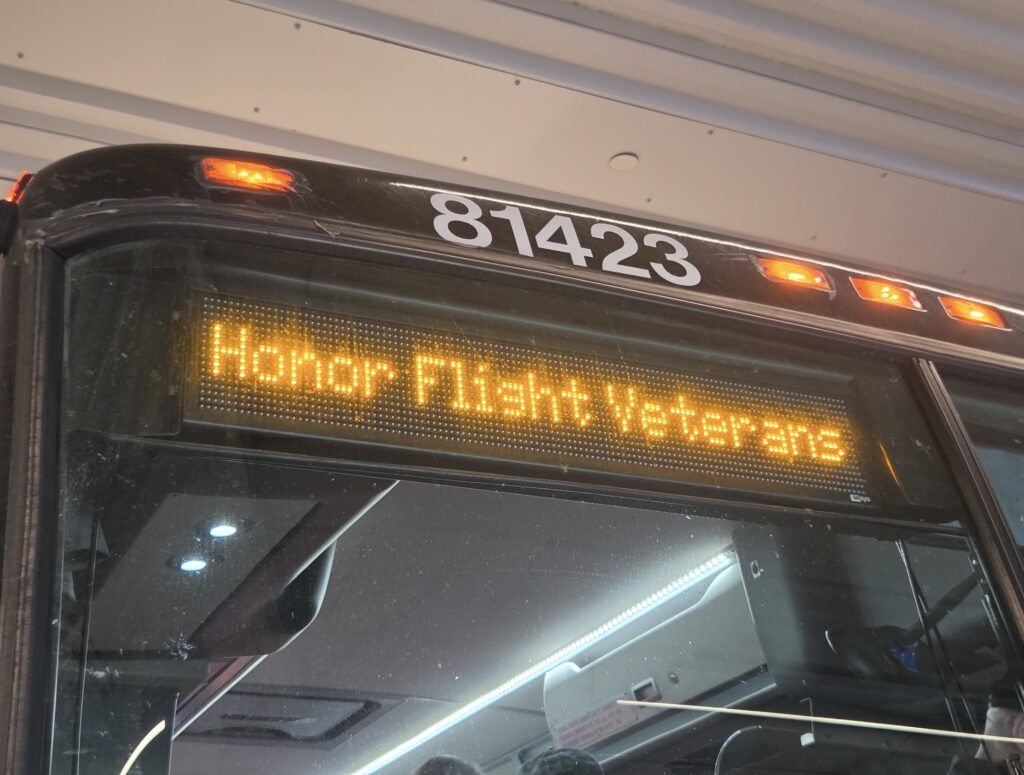
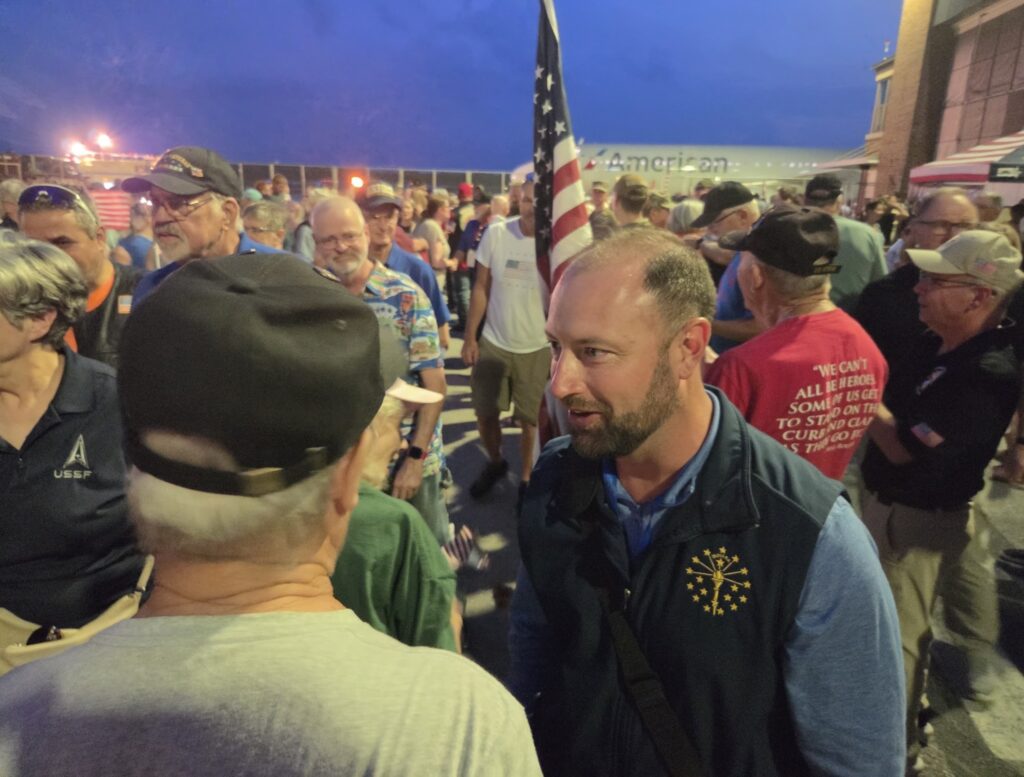
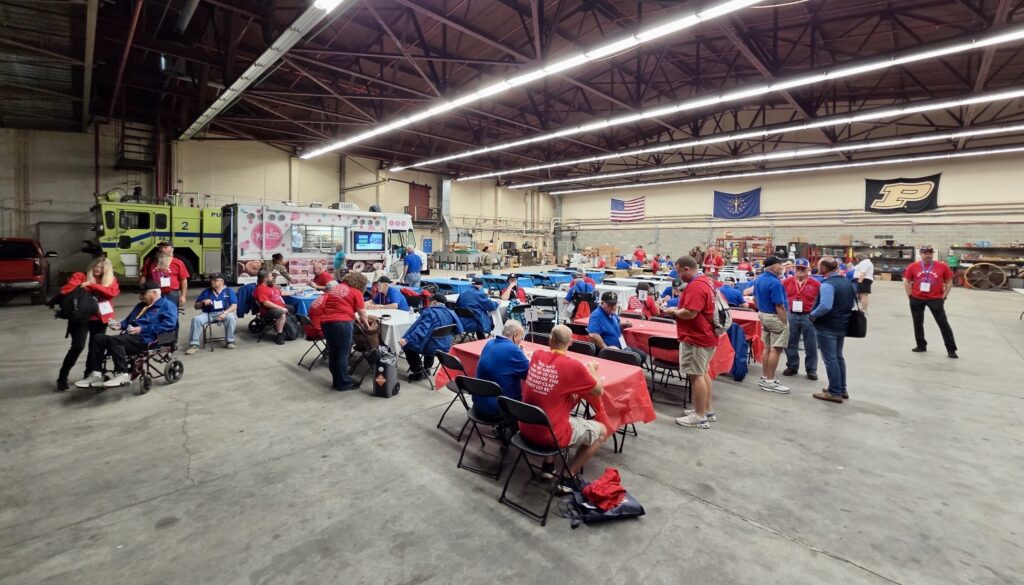
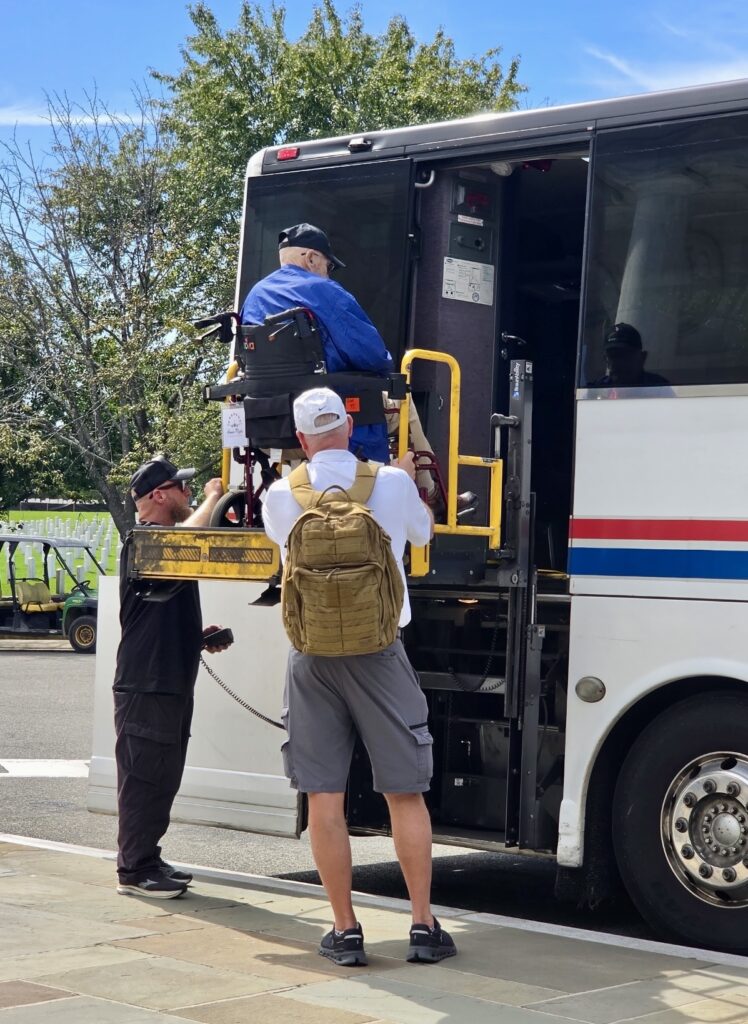
Lafayette, Ind. — The tarmac at Purdue University Airport was still dark at 5 a.m. Tuesday when 84 veterans of World War II, Korea and Vietnam began filing through the doors, some pushed in wheelchairs, some walking on their own, all wearing the same blue polo shirt and the same look of a morning that had been a long time coming. By the time the sun rose over Indiana, they were somewhere over Ohio with breakfast already served and on their way to see, for the first time or the tenth, the monuments a grateful nation had built in their name.
That was the start of the 28th Honor Flight of Greater Lafayette’s one-day mission to Washington, D.C. — a marathon of memorials, strangers’ handshakes and old memories that ended, nearly 18 hours later, with the same 84 veterans stepping off a plane back at Purdue into a large crowd of neighbors, friends and families who had come out to just to say ‘thank you’.
Among the veterans were five from Clinton County — Michael Rule, Robert “Kent” Ryan Jr., Donald Hinesley, Ron Larson and Bernard “Bernie” Cripe. Richard Davis, who attended Clinton Prairie in his youth before his family moved away, was also on the Honor Flight and among the 84 vets to take the trip.
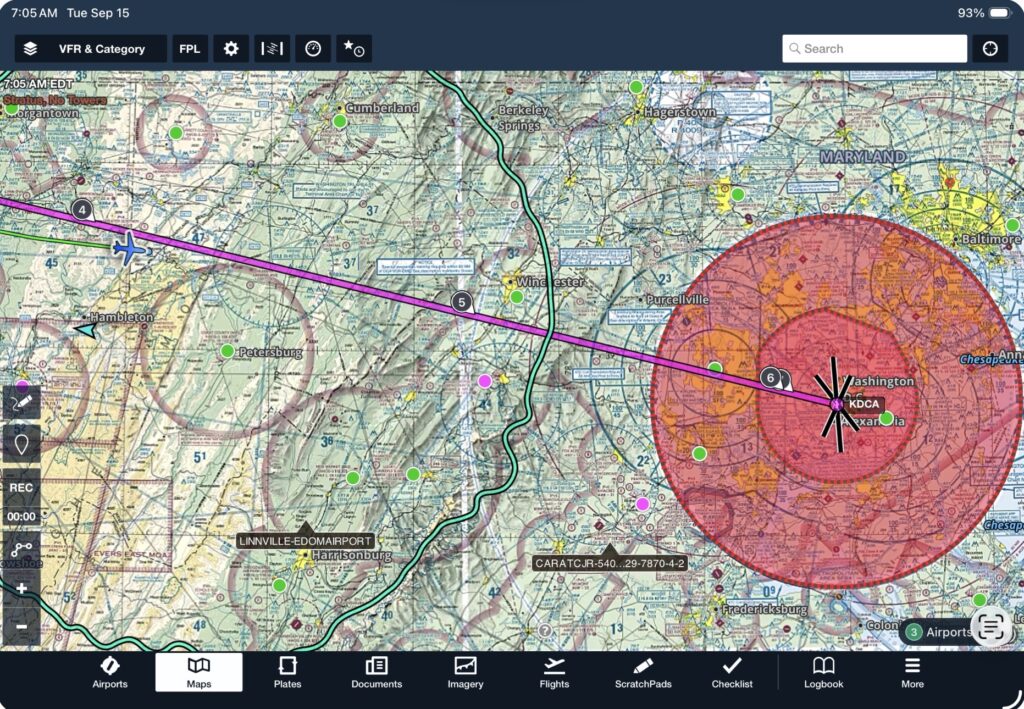
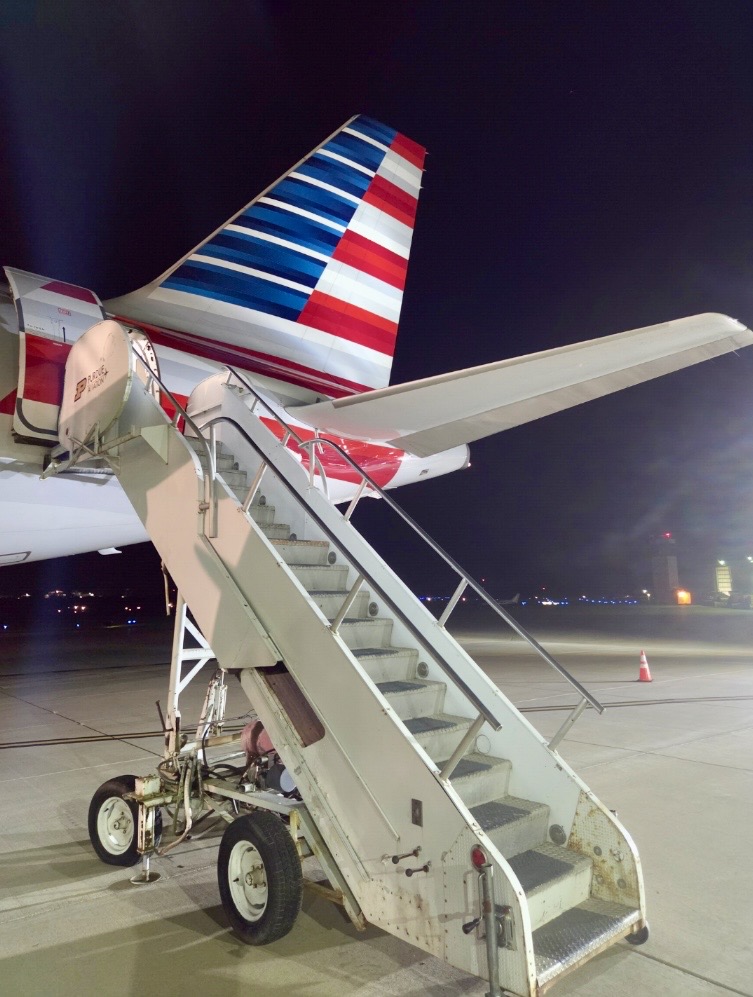
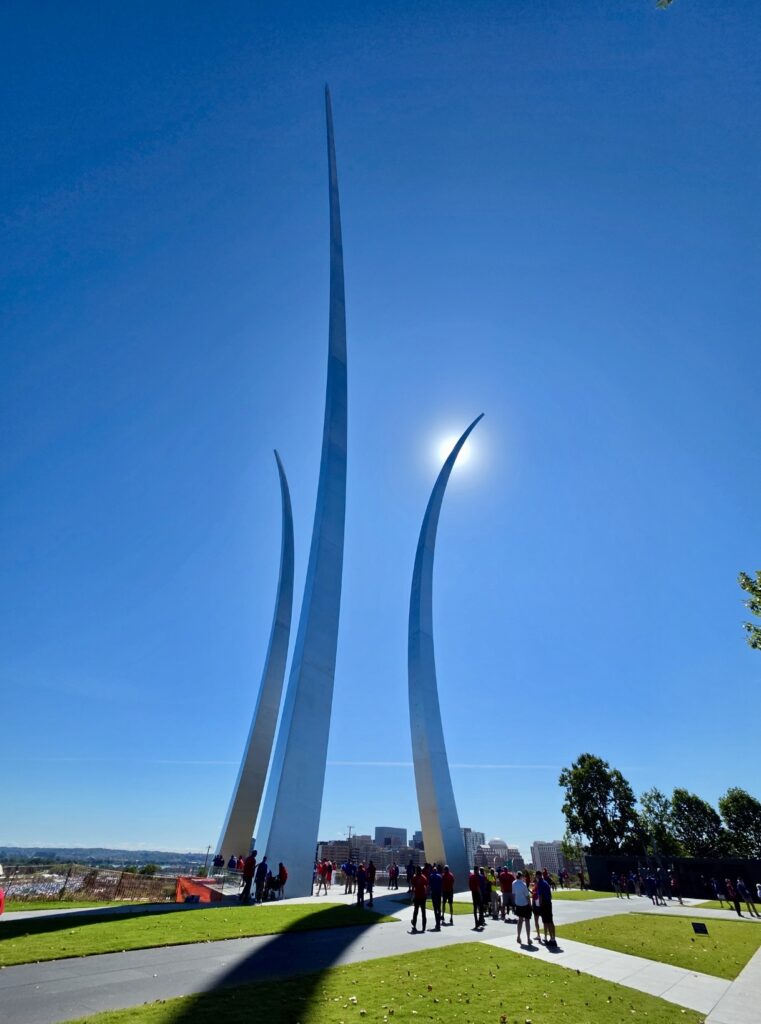
The group’s chartered American Airlines flight pulled up to the gate at Reagan National Airport at the nation’s capital at about 7:40 a.m. What followed was a marathon tour of the monuments and memorials built in the veterans’ honor — Air Force Memorial, the Marine Corps War Memorial, Arlington National Cemetery, the World War II Memorial, the Korean War Veterans Memorial, the Vietnam Veterans Memorial and the Lincoln Memorial — before the group boarded buses back to the airport for a 6:30 p.m. departure and a huge homecoming celebration back at Purdue that stretched into the night.
A Send-Off Rooted in Gold Star Mothers’ Grief
Sunday’s meet-and-greet ceremony ahead of the flight set the tone for the week. Lafayette Mayor Tony Roswarski told veterans and guardians gathered at the Honor Flight meet and greet that the local hub was born from a group of grieving mothers who had lost sons in military service.
“These ladies came to my office and they said, ‘Hey, we want to do something to honor the loss of our children. We want to do something positive,’” Roswarski said, crediting founding Gold Star mothers Marilyn France, Pam Mow, Brenda Wilson, Dana Vann and Patty Frist. “You cannot tell those ladies no about anything… that’s how the Honor Flight got started.”
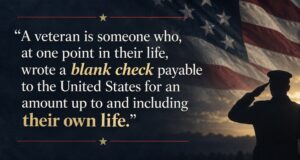
Veteran and longtime Honor Flight speaker Joe Bumbleberg offered a powerful quoted line at the ceremony, describing what military service costs. “A veteran is someone who, at one point in their life, wrote a blank check payable to the United States for an amount up to and including their own life,” Bumbleberg said.
Days later, on the Mall in Washington, Gold Bus veteran Robert Hall echoed the same idea unprompted when asked about his six-year enlistment: “You signed your blank check that could include everything, including your life,” he said. “It was a six-year deal.”
A $75,000 donation from GE Aerospace helped cover the cost of the mission and came with 14 guardian slots for company employees, several of whom greeted veterans with flags along the Mall during the day. The hub, based at Purdue Airport, has flown nearly 2,300 veterans to Washington since its first mission in 2012, all at no cost to the veterans; guardians pay a $500 fee to help cover expenses.
Clinton County’s Veterans
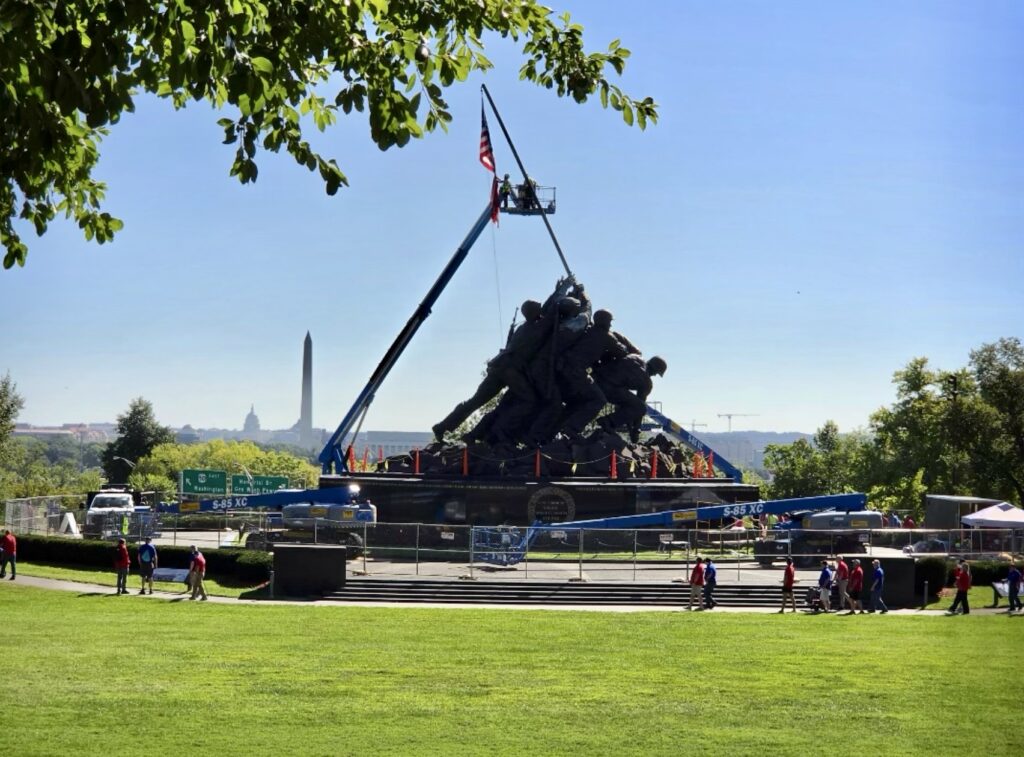
Michael Rule, a drafted Vietnam veteran and Purdue graduate, flew with his oldest daughter, Joanna Kingry, as his guardian — a decision made among three children who all wanted the seat. Standing near the Marine Corps War Memorial, better known as the Iwo Jima Memorial, Rule shared a story with Kingry about a longtime neighbor, Richard “Dick” Crum of the Michigantown area, a Marine who was on Iwo Jima and witnessed the famous flag-raising firsthand. “He was on the island and saw the flag raised,” Rule told his daughter. “One of the few people in the world that saw that.” Kingry, reflecting on the day, called it “something I’ll treasure forever.”
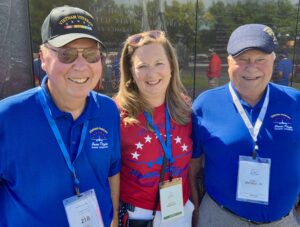
Rule also carried memories of a rougher homecoming from his own war. Back at Purdue in the early 1970s, he said, “I made the mistake of wearing a winter Army jacket across Purdue’s campus one morning, and some young girl — I didn’t know her — she did everything but spit on me. After that, I never wore anything that said I’d been in the service.” He said watching today’s veterans, including himself, get thanked by strangers all day made the contrast impossible to ignore. “To see how people welcome veterans back now is a totally different story,” he said.
Robert “Kent” Ryan Jr., a Marine who was once stationed near Washington at Quantico, brought his 17-year-old grandson along as guardian for the teenager’s first trip to the capital. Sitting at the Iwo Jima Memorial, Ryan said the monument put the war’s cost in perspective.
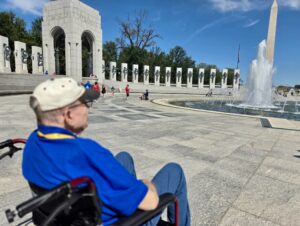
“It’s almost heartbreaking to think how many Marines and other U.S. troops lost their lives in World War II,” Ryan said. “I think the Marines lost more on this island than a good percentage of all the Marines that were lost” across the entire war. Ryan, who learned about Honor Flight eligibility through his local Rotary club, had assumed the program was reserved for combat veterans. “I would not have known this had it not been for the Rotary program,” he said. “I asked that question, and the other guy said, ‘Why didn’t you go?’ I said, ‘Well, I’m not a combat vet.’ He said, ‘We don’t have to be.’ So here I go.”
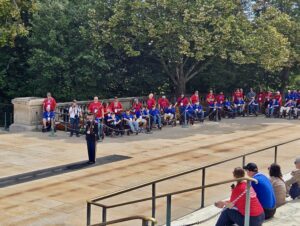
Donald Hinesley, a Rossville native born in 1939 who served stateside in the Army, watched the Changing of the Guard at the Tomb of the Unknown Soldier. The ceremony’s precision brought him back to his own service. “It kind of reminded me when I was in the service how we had to do certain things,” Hinesley said. “They had a command structure, didn’t they? This is the way it is… I really enjoyed it. Very, very solemn.”
Hinesley’s older brother, Joe, spent nearly a year as a German prisoner of war in World War II. Asked how the public can best thank veterans, Hinesley kept it simple: “I think they just ought to shake their hand and thank ’em for their service.”
Ron Larson, a first-time Honor Flight participant who served four years in the Air Force from 1966 to 1970, mostly stationed in South America, also named the Changing of the Guard as his favorite stop of the day. “There was no mistakes, there was nothing,” Larson said of the ceremony’s precision. “Very orderly, very disciplined.” Larson, who like Rule and Ryan remembered a cold homecoming from his own era — “I wouldn’t have walked down State Street up here at Purdue with a uniform on,” he said — described the day less in terms of any single photograph and more as a feeling. “It was the feeling that you got,” he said. “A feeling of being appreciated.”
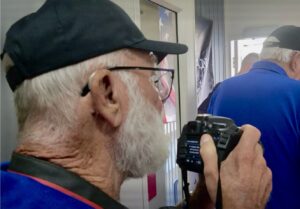
That feeling had started the moment they landed: from his window seat as the plane touched down at Reagan National that morning, Larson watched the airport fire department greet the flight with its traditional water-cannon salute, a sight he was still describing hours later at the gate before the trip home.
Bernard “Bernie” Cripe, also of Clinton County, visited the Vietnam Veterans Memorial to find the names of four family members among the wall’s more than 58,000. “Four out of 58,000,” Cripe said quietly, echoing a line he’d heard earlier in the day about the price of service: “Everybody gave some, some gave all.”
Richard Davis attended Clinton Prairie before his family relocated, later serving in the Navy and, after nursing school, in the Army, where he retired as a lieutenant colonel. Davis’ day took an unexpected turn on the National Mall when he was recognized — not by strangers, but by an old classmate: this reporter (Russ Kaspar), who is covering the flight as a volunteer.
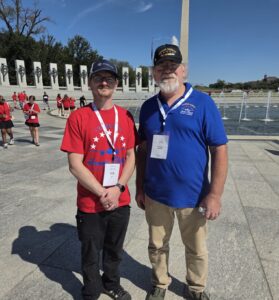
The two had not spoken in more than 50 years. Davis, wearing a Vietnam veteran cap, said strangers young and old sought him out throughout the day. “These kids, like 12, 14, coming up, shaking your hand, thanking you for your service,” Davis said. “It means a lot. It’s overdue for a lot of these people.”
A Day Among the Memorials
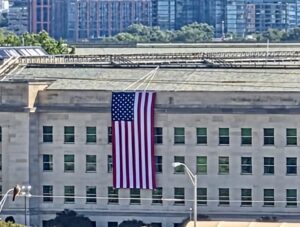
A professional guide in each of the four buses narrated much of the day’s travel, pointing out that the Pentagon — visible from the road near the Air Force Memorial — was built with Indiana limestone, the same stone used on the Lincoln Memorial, the Washington National Cathedral and the interior of the Jefferson Memorial. At the Pentagon Memorial, the guide noted 184 benches, one for each victim of the September 11, 2001, Pentagon attack, and pointed out a large American flag marking the 25th anniversary of the attack draped near the building. The flag marked the location of the aircraft impact on the now-restored building.
Robert Hall, working the assembly floor at Caterpillar’s Lafayette plant on Sept. 11, 2001, recalled the day clearly. “We bounced back pretty quick,” he said, noting the flag went up on the building within a day of the attack. “Very impressive. Stand here and see it… can’t ask for a better day. Sunshine and 70.”
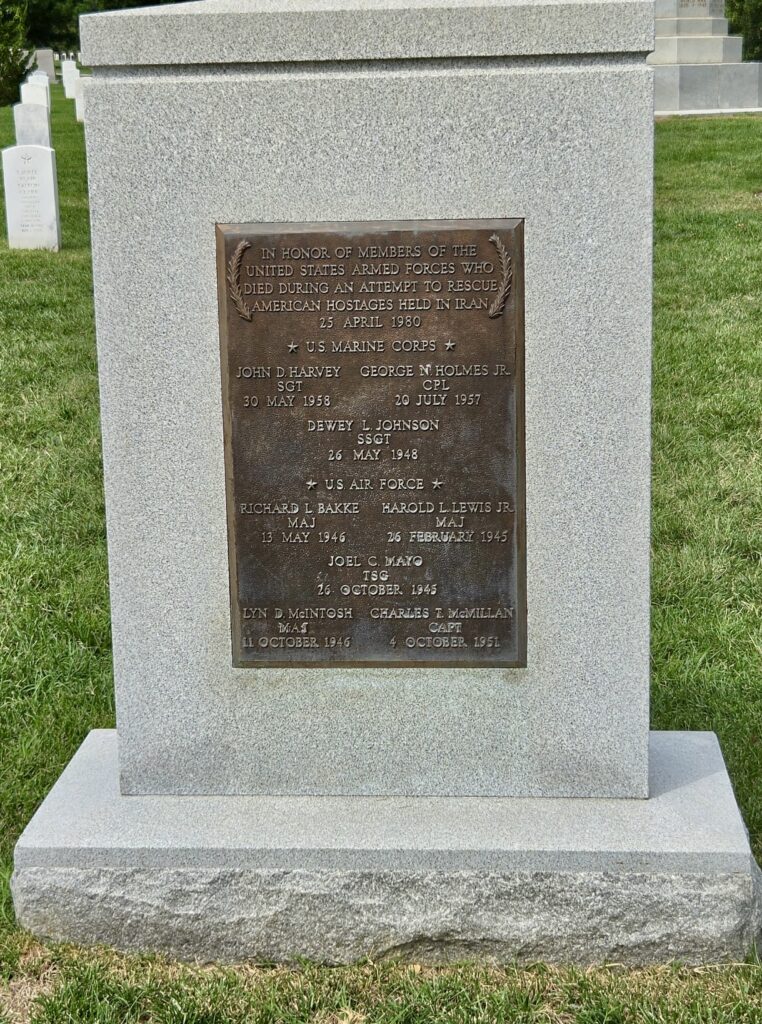
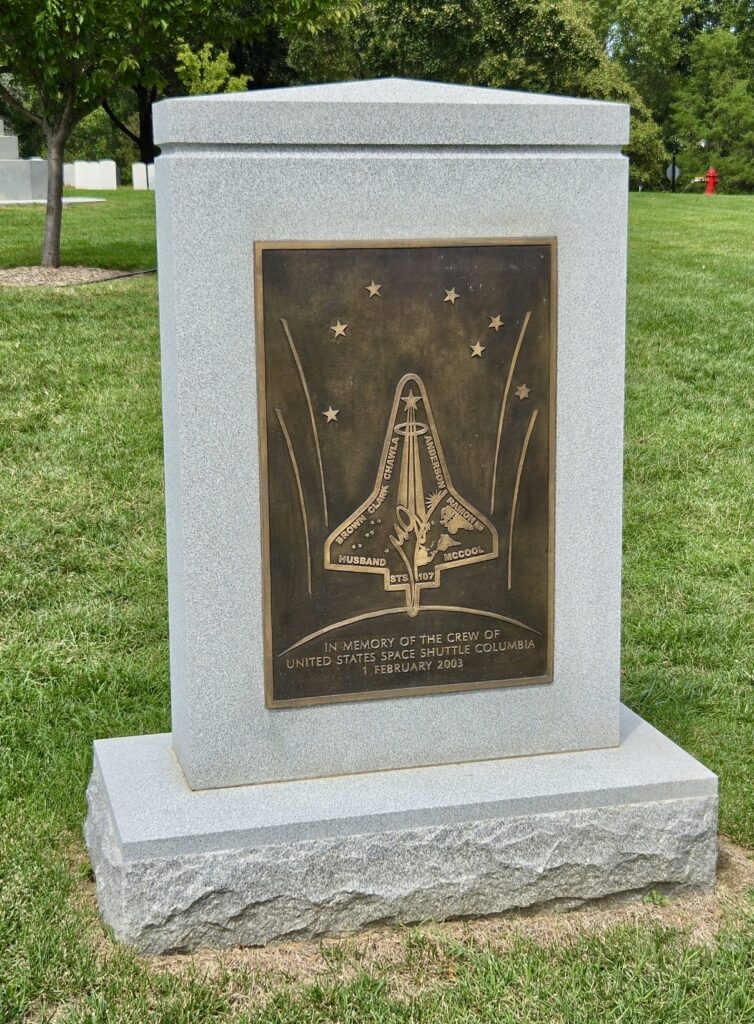
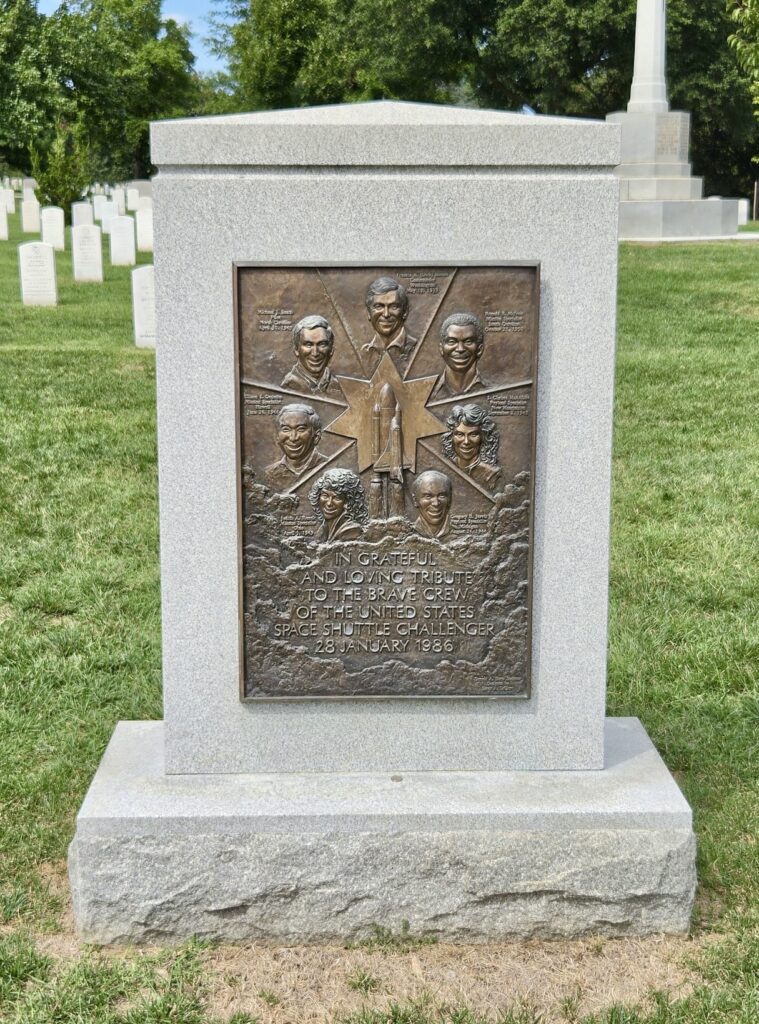
At Arlington National Cemetery, the guide traced the property’s history from a plantation owned by George Washington’s step-grandson through its inheritance by Robert E. Lee’s family, to its selection as a military cemetery in 1864 under Quartermaster Gen. Montgomery Meigs. Veterans and guardians alike stood in silence for the Changing of the Guard at the Tomb of the Unknown Soldier, an event now performed every 30 minutes through September before shifting to hourly in the winter months. The guide pointed out the graves of Adm. Richard Byrd, Gen. Colin Powell, World War II’s most decorated soldier Audie Murphy, and computing pioneer Grace Hopper, credited with coining the term “debugging a computer” after removing a moth from an early computer.
At the World War II Memorial, the group paused at a wall inscribed with Gen. Dwight D. Eisenhower’s D-Day order to Allied forces: “The eyes of the world are upon you. I have full confidence in your courage, devotion to duty, and skill in battle.”
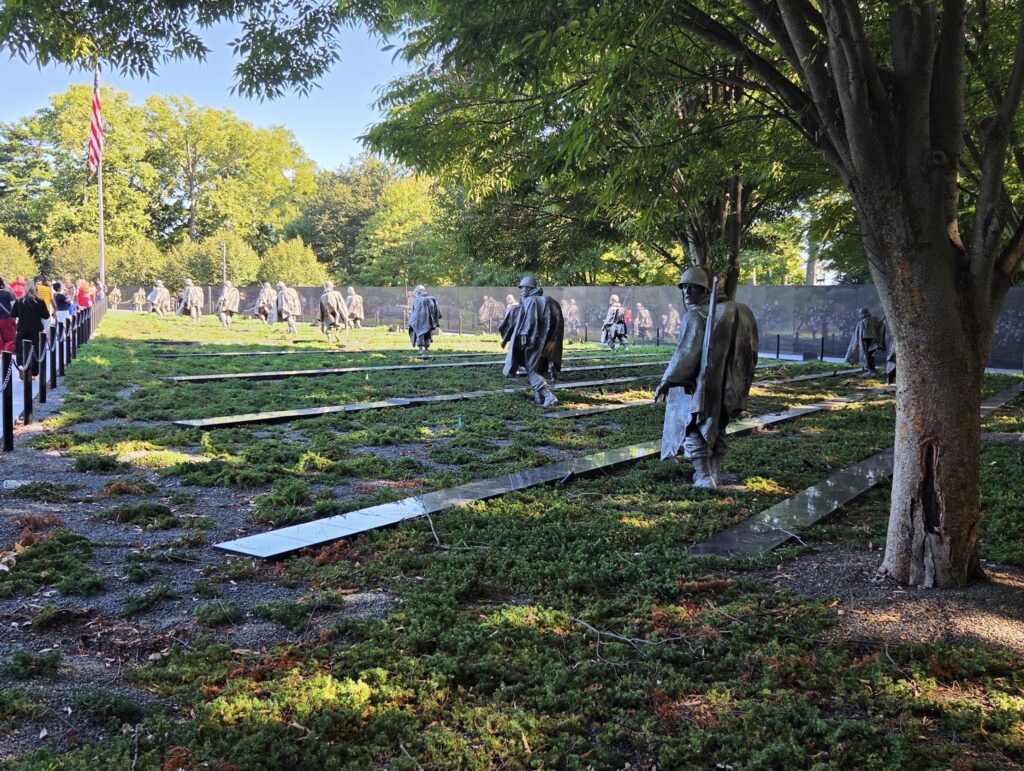
At the Korean War Veterans Memorial, the guide explained the memorial’s 19 statues of soldiers on patrol were designed, with the help of a reflective black wall, to represent 38 — a nod to the 38th parallel.
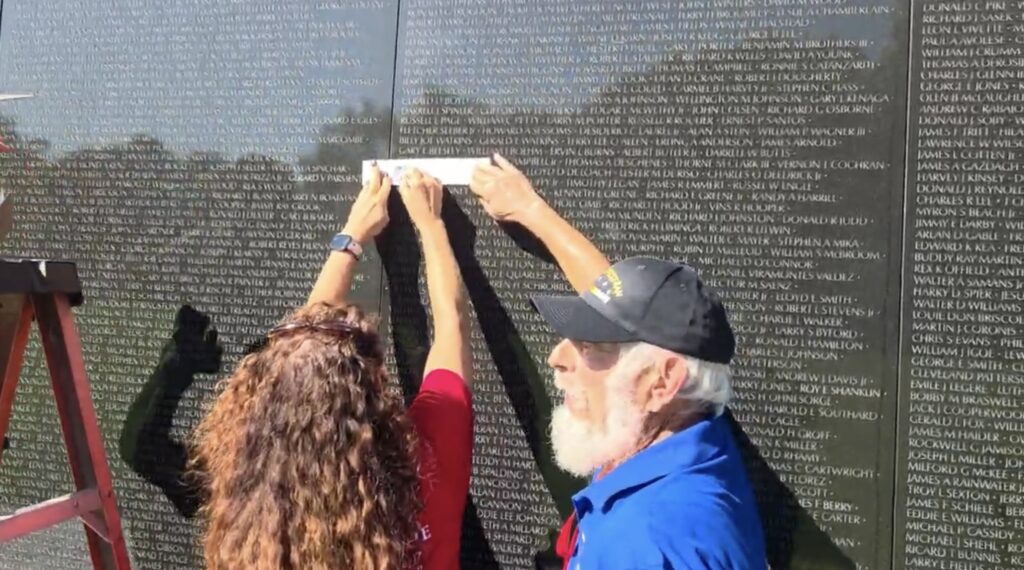
At the Vietnam Veterans Memorial, veterans searched for names of friends and family among the wall’s black granite panels; the guide singled out the name of Mary Therese Klinker, one of only eight women listed on the wall and a Lafayette, Indiana, native.
Guardians and staff had brought paper and pencils for anyone who wanted to make a rubbing of a name to bring home. One veteran on the trip searched, without success, for a missing-in-action soldier from Covington whose brother he had served alongside.
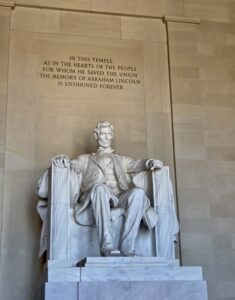
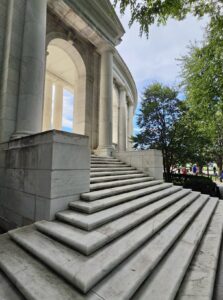
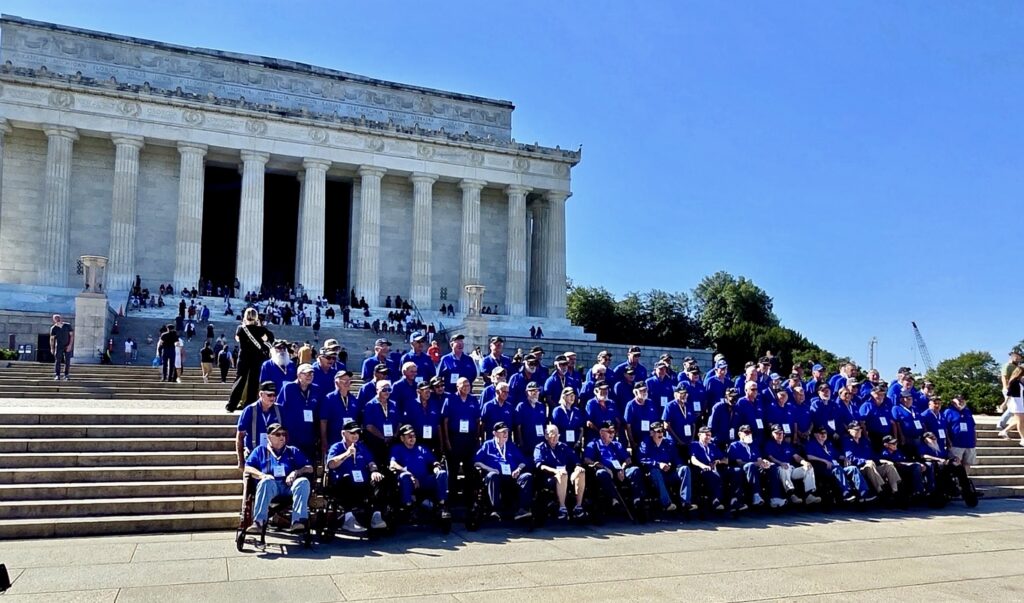
At the last stop of the day, the group of veterans paused for a photograph of the entire delegation in their blue Honor Flight polos on the steps of the Lincoln Memorial, the Reflecting Pool, under re-construction, and Washington Monument stretching out behind them.
Strangers Along the Way
Throughout the day, the veterans were met by well-wishers who had no connection to the flight beyond wanting to say thank you. A group of teenagers from a Catholic school in Toledo, Ohio, spent their own field trip shaking hands with veterans along the Mall. “We’re just here to experience the Washington, D.C., trip and respect these Honor Flight veterans that have served our country,” one student said.
Robert Bundy, a Vietnam veteran who was moved to tears more than once during the day, said the encounters carried extra weight because of what didn’t happen decades earlier. “It’s a lot of emotions… tears of joy, because it didn’t happen when it should have,” Bundy said.
own father, a World War II veteran, refused to stand when asked to be recognized at Veterans Day and Memorial Day events for years, Bundy said, because he wanted the recognition to go instead to those who never made it home — including his father’s best friend and fellow soldier, Dickie Millis, a photographer who Bundy said was Indiana’s first casualty of the Korean War, killed in a plane crash.
Bus captains Ted Brink and Bob Bluemke, longtime volunteers with the hub, said the emotional payoff of the mission comes full circle by day’s end. “It goes from initially talking to a veteran that has bad feelings about their experience in Vietnam, and then when we get back home and the greeting they get… we get so many comments saying, ‘Wow, that’s what they needed,’” Brink said. “It was the prescription,” he added, “because we did ’em wrong.”
Coming Home
The buses rolled back to Reagan National Airport in the early evening for the 6:30 p.m. flight home which lasted an hour and forty-five minutes. The veterans were moved with a surprise delivery ‘mail call’ on the flight home. Letters from family and friends were read by the vets as the jet flew over West Virginia, Ohio and Eastern Indiana.
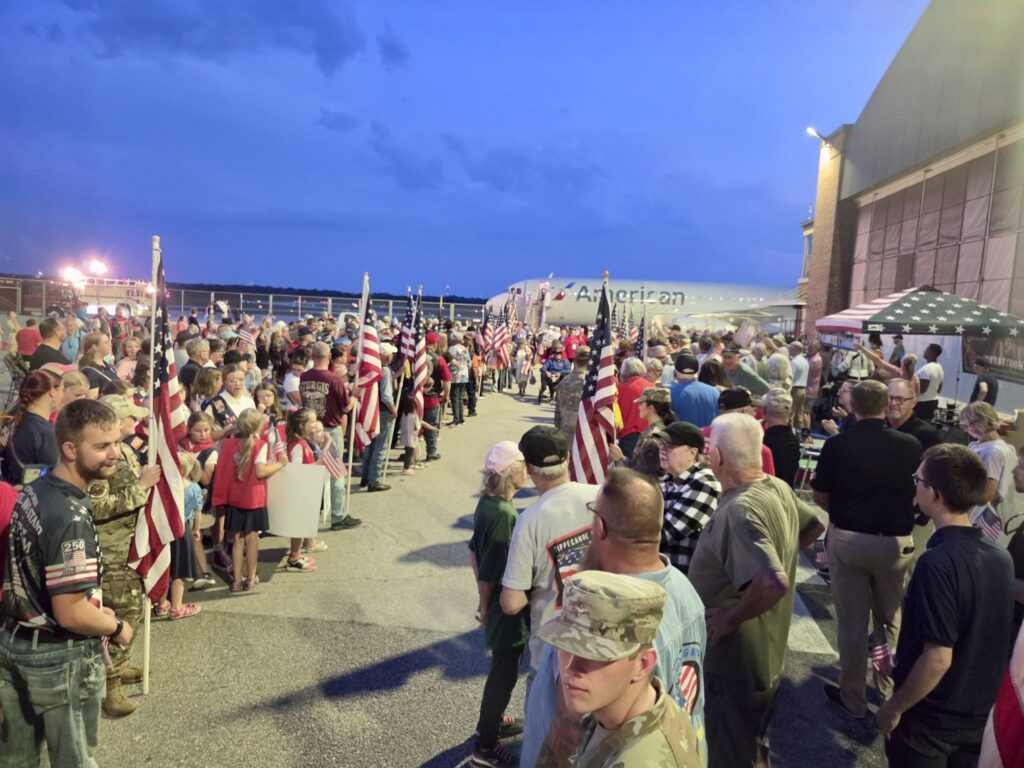
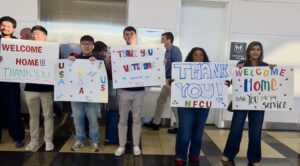
Back in Indiana, the plane touched down at Purdue University Airport after a long day, to a large, festive crowd of well-wishers waving flags on the darkened tarmac — the kind of homecoming organizers say routinely draws 400 to 500 people regardless of weather. The crowd gathering to recieve the vets on September 15th appeared to easily exceed 1,000.
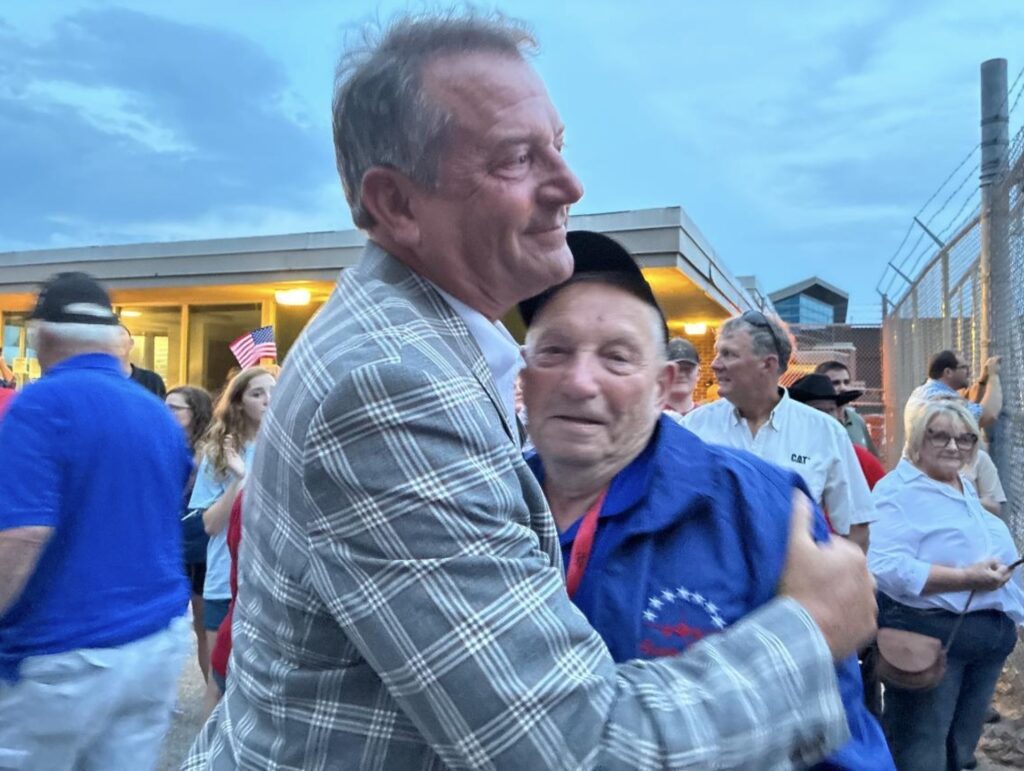
For veterans like Rule, Ryan, Hinesley, Larson, Cripe and Davis, and for the volunteers, bus captains and strangers who made the day possible, it was, as Bundy put it on the National Mall hours earlier, the thank-you many of them had waited half a century to receive.
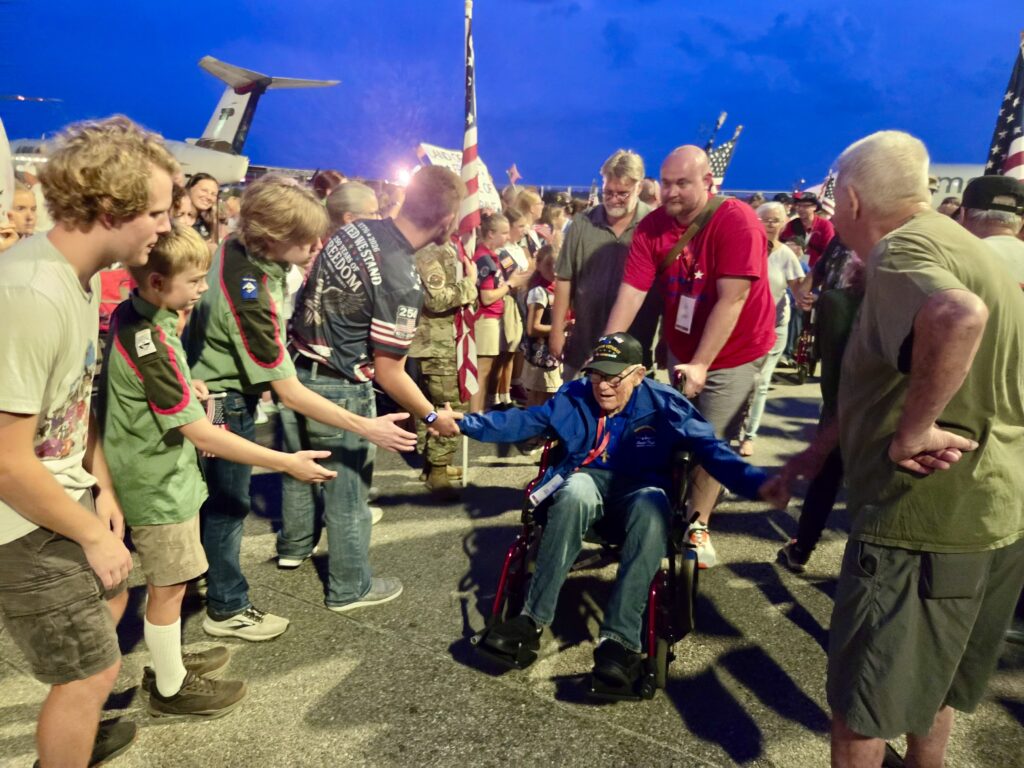
One of the goals of this article is to make sure area vets who served us have an opportunity to experience an honor flight. To learn more about the flight and apply, CLICK honorflightlafayette.com
Editor’s note: Kaspar Media/ WILO Radio owner and Clinton County Daily News Publisher Russell Kaspar accompanied the 28th Honor Flight of Greater Lafayette as a volunteer to report this story firsthand.
Trip Scrapbook: Photos by Russ Kaspar: