Camp Cullom Academy of Science
Camp Cullom, owned by the children of Clinton County, became an outdoor and hands-on science lab Friday evening, October 2, and all day Saturday, October 3. More than 20 gifted fifth-grade students took part in the annual Camp Cullom Academy of Science.
All five Clinton County elementary schools sent some of their best science students: Clinton Central, Clinton Prairie, Rossville, Green Meadows and Suncrest. Fifth-grade teachers chose the students based on their passion for science and work in the classroom.
The event is presented by the Clinton County Foundation for Youth/Camp Cullom, which is supported in part by United Way for Clinton County. Families and students paid nothing to attend.
A Night Under the Stars
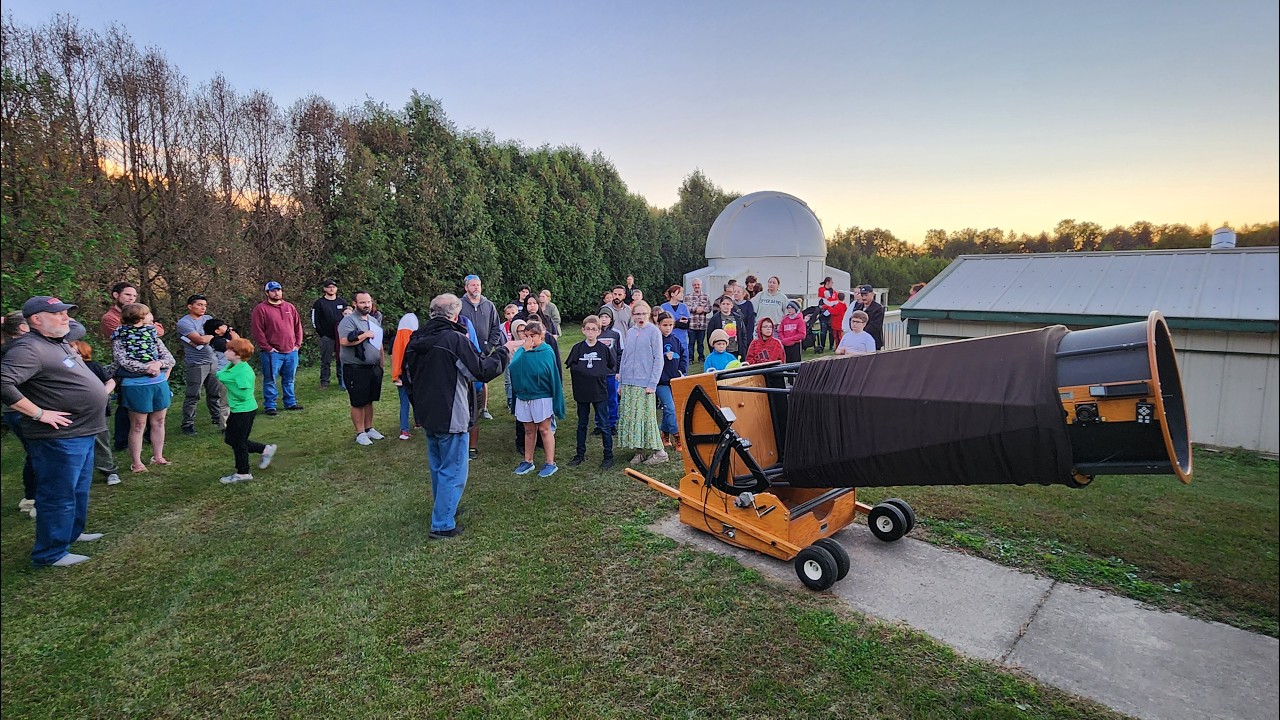
The academy started Friday evening at the Galileo Gallery at Camp Cullom’s Prairie Grass Observatory. Andy Schilling a trustee and the Observatory and Camp Cullom Board member, gave students and their families a talk called “How Big is the Milky Way Galaxy?”
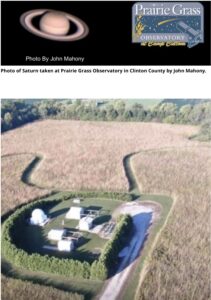
Observatory trustees Russ Kaspar, Andy Schilling and George Wyncott helped students use the large telescope and a large 100mm binocular to look at a Saturn, star clusters, the Milky Way and the North Star and other constellations. Schilling projected objects on the large outdoor screen at the Gallery in real time as he pointed his Seestar scope to the sky and captured several images for all to see.
The evening also included a laser-guided constellation talk and a look at an extensive meteorite collection that includes a chip of the moon.
A Full Day of Discovery
Saturday began at the Nature Center with check-in registration and team assignments. Russ Kaspar, forester Jeff Swackhamer and Academy Co-ordinator Susan Kaspar then welcomed students and introduced the scientific method including a rolling car experiment, and laid out the plan for the day.
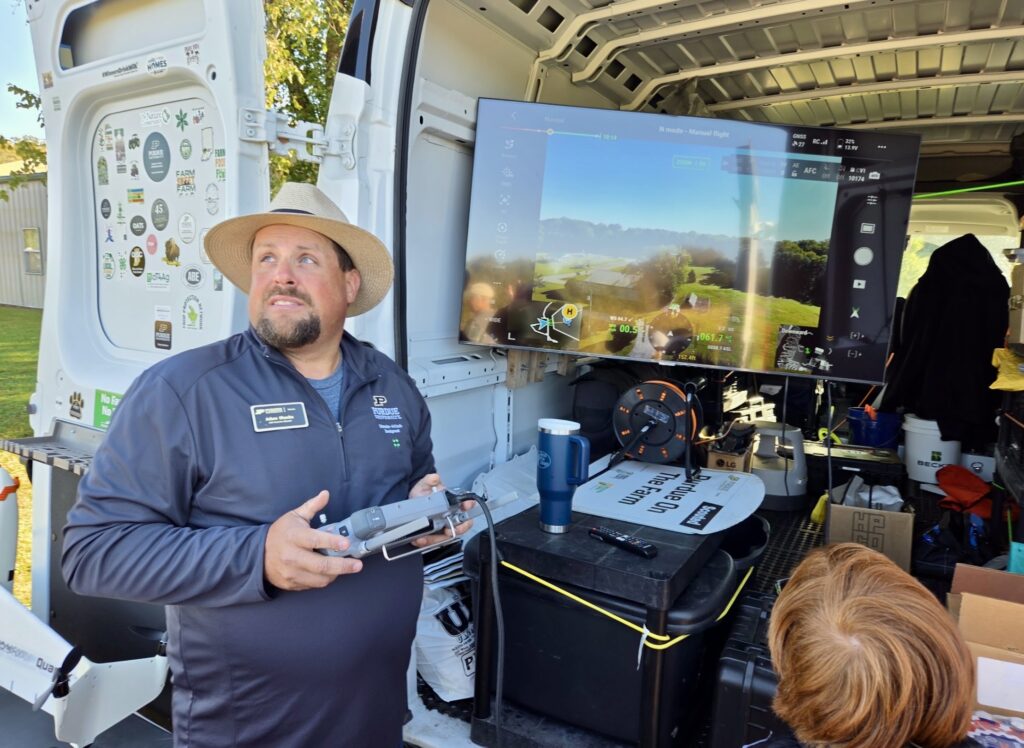
Adam Shanks of Purdue University Digital Agriculture brought his mobile drone and technology trailer. Shanks showed students how unmanned aerial vehicles are used in modern farming and research. Students waved at themselves as the drone imaged the group from above while the image was projected on a large screen in the well equipped Purdue Digital Agriculture Van.
Next, students split into groups and rotated between two field sessions:
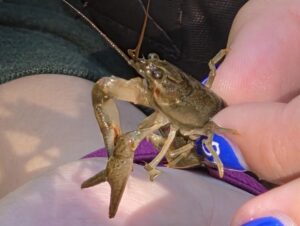
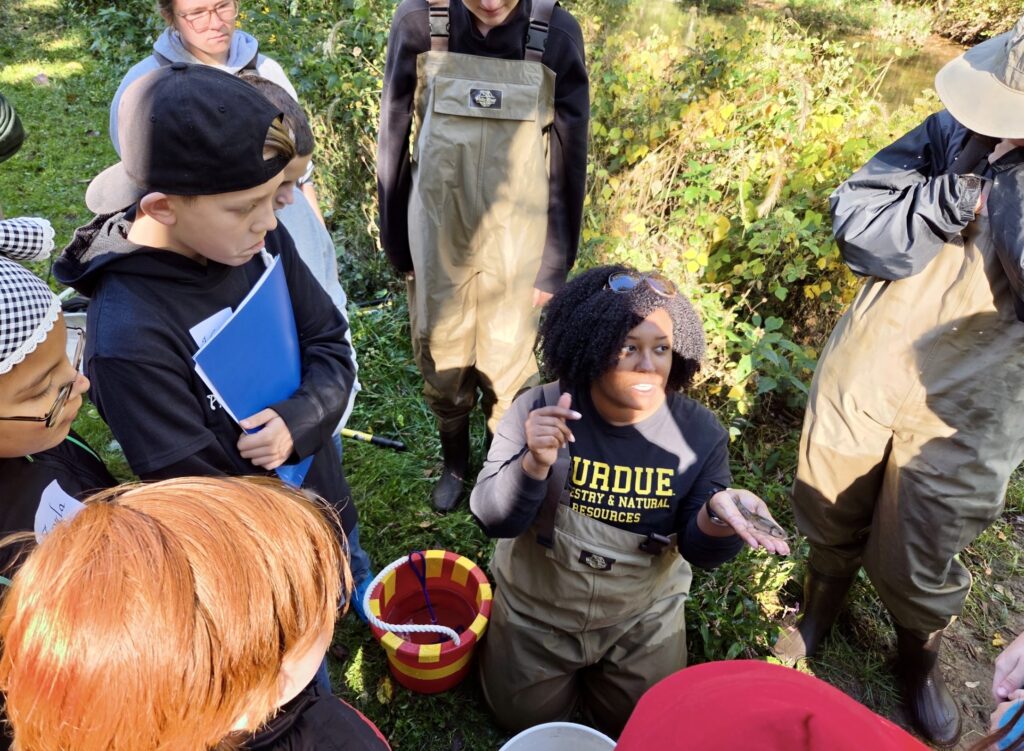
- Aquatic ecologist Megan Gunn and her team from Purdue University took the 5th grade students into Spring Creek to study a small stream ecosystem. Students waded in, collected samples and got a close look at crayfish, rare fish and other creatures living in the creek.
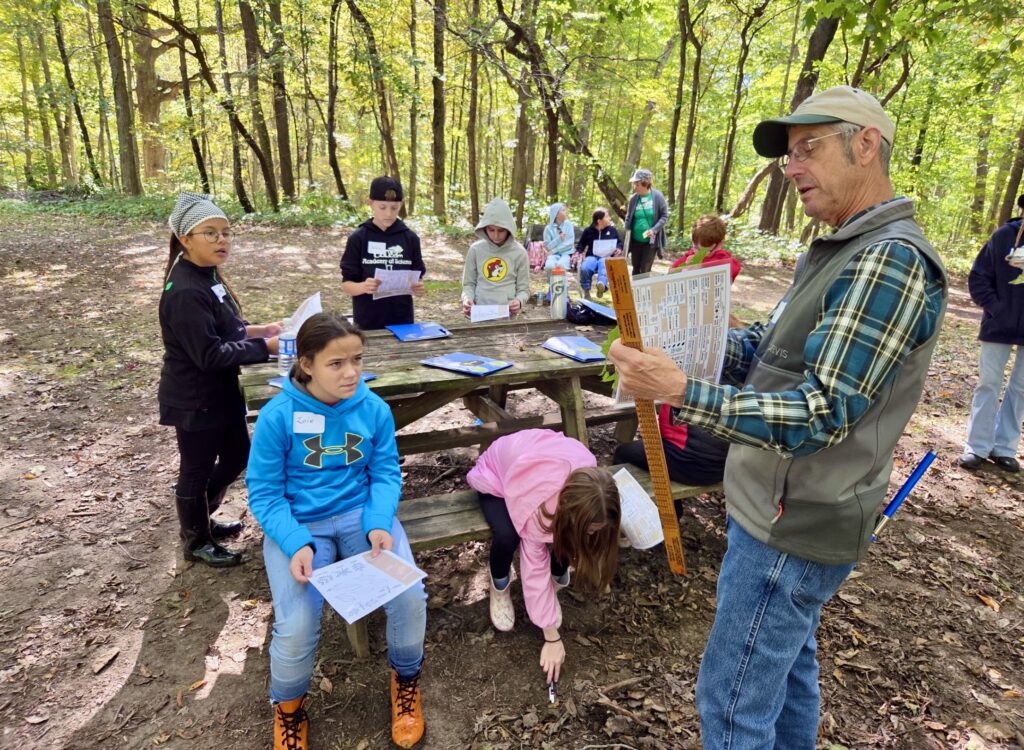
- Camp Cullom Board President and Professional Forester Jeff Swackhamer led a study of the woodland ecosystem. Students identified and measured trees and learned how a forest community works.
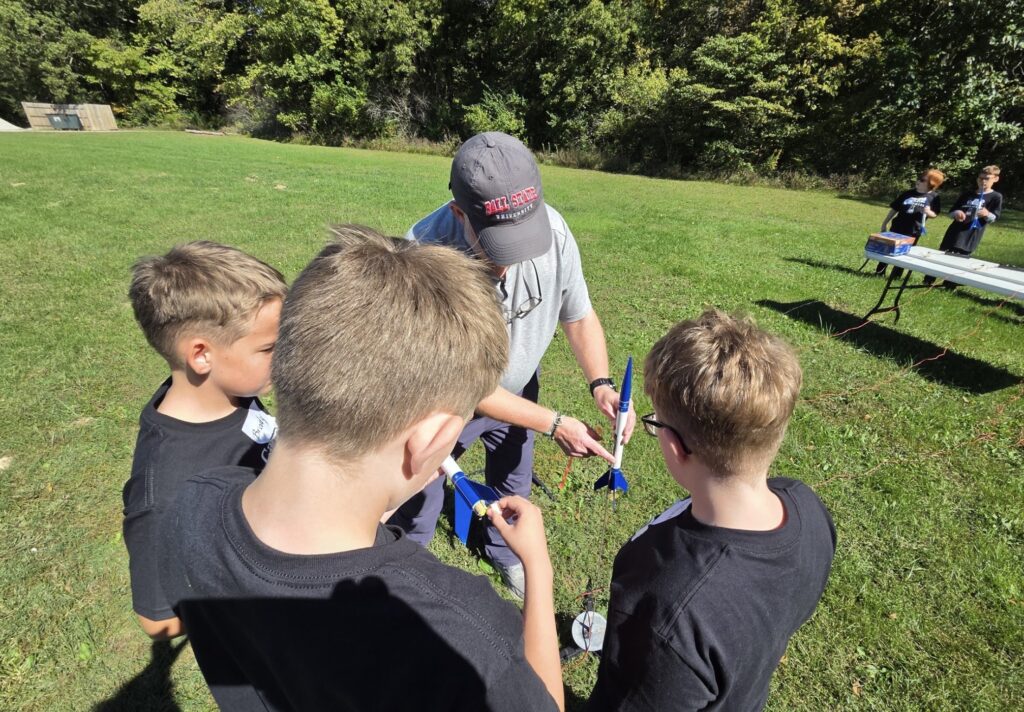
After a pizza lunch at the Rotary Shelter, George Wyncott and Schilling taught a session on rockets and flight theory. Each student finished building a rocket and successfully launched it on the Camp Cullom grounds. Each student took the rocket home.
Retired science teacher Mike Bever followed with “Bubble-ology,” a crowd favorite that included giant bubbles. Students were then able to experiement with bubbles, including a station making it possible for students to stand inside a bubble.
The last class of the day was VEX Competition Robotics. It was led by Greg McCauley, president and CEO of Grand Universe Corporation. McCauley was a NASA mission planner and a member of the Apollo 17 lunar launch team.
Students then put together team reports summarizing what they had learned and evaluated the day for their “ticket out the door.”
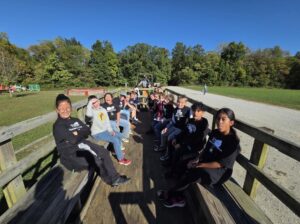
Before dinner, Ranger Hoppy Bray and Swackhamer took students on a grand wagon ride around Camp Cullom’s 90 acres, including a visit through the most endangered eco-system in America, the tallgrass prairie.
Family Dinner and Team Reports
The weekend ended with a Family Dinner in the Lodge, served at no cost to students and their families. The menu included lasagna, chicken fettuccine Alfredo, salad, drinks and Camp Cullom’s own flavor of Glover’s Ice Cream, Blueberry Waffle Cone.
After dinner, each student presented a quick report to parents, Camp Cullom board members and instructors, sharing what they discovered throughout the day.
The Camp Cullom Academy of Science is held every year to give Clinton County’s young scientists real experience in the field, the lab and the night sky, taught by people who work in these fields. The 90-acre camp belongs to the children of the county, and for one weekend each fall it serves as one of the best science classrooms around.
Academy of Science Co-ordinator, Susan Kaspar, said “It is such a pleasure to work with this great group of kids. Parents and teachers should be proud of these Clinton County students and their kindling love for science. Our faculty was amazing and brought out the wonder of science and the thrill of discovery ‘in 3D and technicolor’. I also want to thank our many volunteers, donors and board members who support this event.”
Erick Dircks created a video to capture some of the special moments students enjoyed during the day. Faculty at the academy have actually heard “This has been the best day of my life” more than once.
CLICK HERE for more photos.
Facebook users CLICK HERE for more photos.