
Lawmakers representing North Central Indiana fielded pointed questions on taxes, Medicaid, data centers and childcare Saturday morning during the Clinton County Chamber of Commerce Legislative Breakfast at Wesley Manor, emphasizing fiscal restraint while acknowledging mounting local concerns over costs and services.
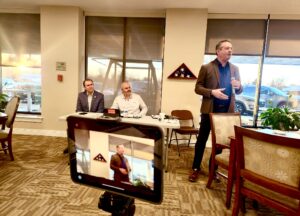
State Sen. Brian Buchanan (District 7) and State Reps. Mark Genda (District 41) and Heath VanNatter (District 38) addressed a packed room at the Wesley Manor Event Center on January 17, outlining key bills in the short 2026 session and then spending most of the time in an extended question‑and‑answer period. Shan Sheridan moderated the forum, which was also broadcast live on Hoosierland TV.
Medicaid, taxes and state budget pressures
Buchanan said Senate Bill 1, the Senate’s top‑numbered bill this year, focuses on tightening oversight of Medicaid to reduce “waste, fraud and abuse” while protecting coverage for vulnerable Hoosiers. “We want eligible people to be on Medicaid, we want people to get help who need it,” he said, adding that minors, seniors over 65 and people with disabilities would not be affected by the proposed changes.
He warned that Medicaid growth is putting pressure on other state priorities, including K‑12 education, which he said has declined from just over half of the state budget to “about 48–49 percent” as health‑care spending climbs. “It is unsustainable,” Buchanan said. “It will start affecting everything else, every service we provide in Indiana.”
Property tax reform and local revenues
On taxes, Buchanan revisited last year’s property‑tax overhaul and the continuing debate over how to balance relief for homeowners with stable funding for cities, towns and schools. He described the state’s long‑term goal as “essentially property tax reform,” moving from a single county‑wide “pie” of property tax revenue to a system where “every unit of government…will have their own piece of the pie” aligned more closely with local income tax collections.
A question from Frankfort Mayor Judy Sheets centered on Senate Bill 238, which would adjust local income‑tax distributions after the reform left some municipalities facing steep cuts. Buchanan said larger cities such as Frankfort, Lebanon and Crawfordsville could otherwise see “35, 40, if not almost a 50 percent budget cut,” and told local leaders the proposal is “getting a lot of discussion” even if the final language may change.
House agenda: affordability and regulation
VanNatter outlined several House Republican priority bills, including measures on housing affordability (House Bill 1001), energy affordability (HB 1002), government efficiency (HB 1003) and education deregulation (HB 1004). He also highlighted his own homestead property‑tax freeze bill, HB 1146, which would lock in a homeowner’s property‑tax bill at the time of purchase until the home is sold, and a “50‑50 shared parenting” proposal that grew out of a Clinton County constituent concern about custody arrangements.
The Kokomo‑area lawmaker said he remains supportive of decriminalizing marijuana but did not file his usual bill this year, saying there was “no chance of it passing” in a short session. He distinguished decriminalization from full legalization and noted that Ohio has had decriminalization on the books since the 1970s.
Energy, data centers and utilities
Audience questions turned repeatedly to energy costs, utility regulation and the potential impact of large data centers on local rates and infrastructure. Buchanan, who serves on the Indiana Senate Utilities Committee, said utility bills are “one of the top issues” he hears about as constituents see monthly charges jump from “180 a month up to 250, or higher than that.” He said lawmakers are studying HB 1002 and other proposals, but called the utility landscape “layer after layer after layer” and asked local officials for detailed feedback.
On data centers, Buchanan said the issue has become “very divisive” in communities around the state and argued that siting decisions should remain primarily local, similar to wind and solar projects. He pointed to a law approved last year that requires large power users such as data centers to pay the upfront cost of most new infrastructure. “If a large energy user comes in and they need a certain amount of power, they’re responsible for paying up front for 80 percent of that infrastructure,” he said, adding that the requirement is placed on the “mothership” company rather than a subsidiary so costs cannot be easily shifted if a project fails.
Both Buchanan and VanNatter said small modular nuclear reactors are likely to be part of Indiana’s long‑term energy mix, but cautioned that permitting and construction timelines mean any local benefits are “a 10 to 20 year plan, not immediate.” Buchanan cited Indiana Michigan Power’s plan for a first small modular reactor near Rockport as an early example.
Childcare, public health and local services
Childcare availability and cost emerged as another major theme, with lawmakers connecting it to workforce participation and economic development. Genda referenced Gov. Mike Braun’s his second State of the State address on January 14, 2026 and said the administration wants corporations coming to Indiana to have “skin in the game” by helping provide childcare for their workers. “If we’re open for business, then we have got to figure out the childcare situation,” Genda said, calling it “critical.”
Audience members raised concerns that recent Medicaid and public‑health changes could limit who local departments are allowed to serve, particularly undocumented residents, and threaten efforts to prevent the spread of diseases such as tuberculosis. They also flagged rising pharmaceutical costs for inmates and described a new federal grant opportunity that could steer millions of dollars into rural health infrastructure for an eight‑county region that includes Clinton County, asking legislators to help identify a General Assembly member to sit on the required regional committee.
Election issues, redistricting and criminal justice
The legislators also faced questions on redistricting, tenant‑rights proposals, lottery tickets being sold online, rape‑kit testing and disability services. Genda reiterated that he was one of only 12 “no” votes in the House on a recent redistricting proposal, saying his decision reflected nearly “10 to 1” opposition from constituents who contacted him.
When pressed by an audience member about legislation to fund testing of backlogged rape kits, lawmakers declined to endorse a specific bill without reading it but said they support the broader goal of making sure kits are processed and cases can move forward. Buchanan closed by emphasizing that constituent feedback often drives his decisions on contentious issues. “Sometimes the phone calls you get…are against an issue,” he said. “On these tough issues, I’ll oftentimes pick up a phone and start calling people.”
Kaspar Media will continue to follow developments in Indianapolis that may affect Clinton, Carroll and Boone Counties.