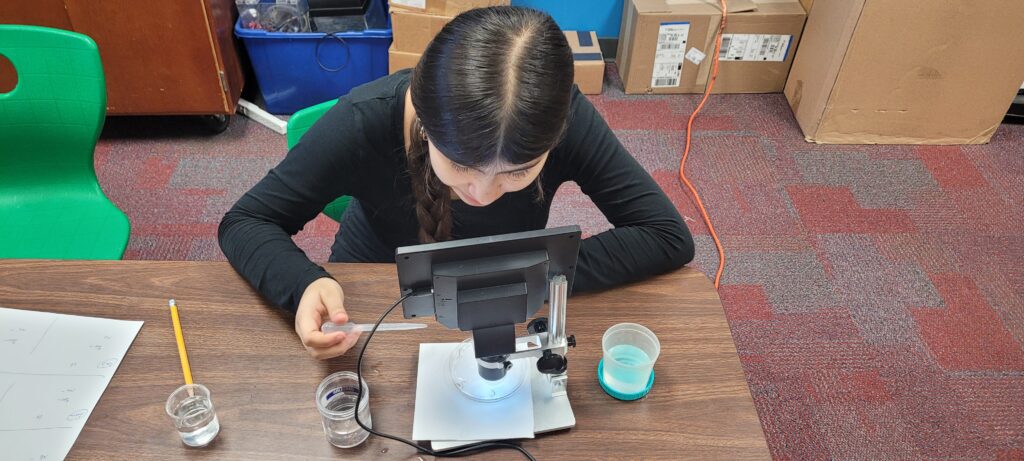
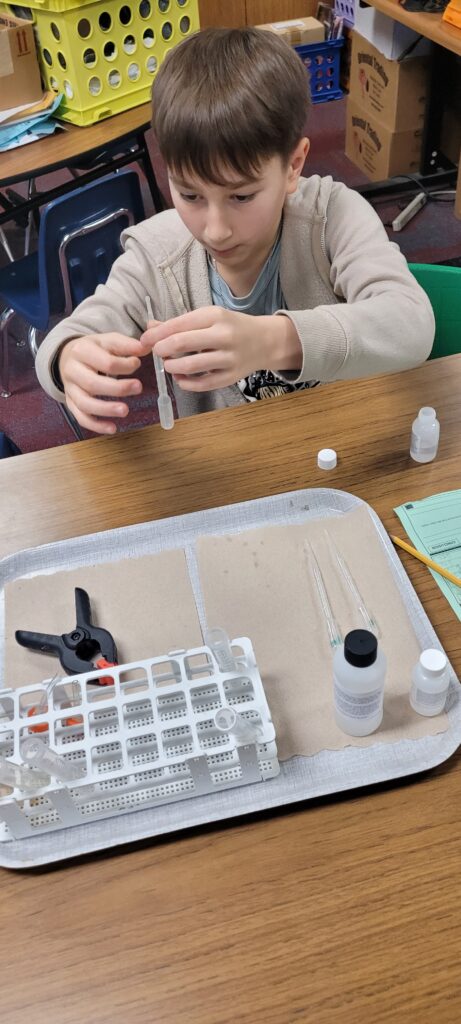
Each spring, Frankfort students take part in the Lafayette Regional Science and Engineering Fair. While the competition takes place in March, the work behind each project begins much earlier in the school year.
Students in grades 5-8 who participate in CSF’s High-Ability program begin brainstorming their science fair ideas within the first month of school. High-Ability Director Bret Rhea said the early start gives students time to think through their ideas. “Within a month, they usually have a general theme or topic,” Rhea said. “By fall break, they’ve moved toward a more specific plan. It takes time for ideas to form.” From there, students spend the fall and winter working through planning and experimentation. Most aim to complete the experimental portion of their projects before the end of the semester. The weeks that follow are spent analyzing results and preparing for presentation. “We don’t do a lot of hypothesis research,” Rhea said. “That spoils the fun of discovery. I want valid reasoning – it might not be correct, and that’s okay.” Most projects take three to four months of steady work. Some require additional time outside of class, potentially even daily work for projects focused on life sciences, plants, or behavioral studies. The focus, Rhea said, is on careful thinking and sustained effort over time.
That effort is often clear in projects that begin with student curiosity and change as understanding grows. Mr. Rhea recalled a few examples of projects like these from previous years of competition. One student began by asking about how energy is transferred when an object is dropped onto different surfaces. To test the idea, the student had to redesign specialized homemade equipment multiple times to improve consistency. Each adjustment helped solve a problem and led to better results. Another student was interested in exploring vitamin C levels in food using chemical testing. After comparing fresh and processed foods, she expanded the project to study how baking affected vitamin C content. The results raised new questions and required further testing. “These projects change as students learn more,” Rhea said. “They have to adjust and think through what the results are telling them.” Former student Karina Castaneda – one of just three Frankfort students to ever participate in the International Science Fair – followed this formula as well. When she was just a sixth grader, her interest in language grew into a behavioral science project that would span multiple years’ science fairs and was connected directly to her own experiences. Each year, she added complexity to her project to take it even further, and as she did so, she also took greater ownership of her work. “She drove the bus more than most students,” Rhea said. “Once she got a little taste of success, the motivation became internal.”
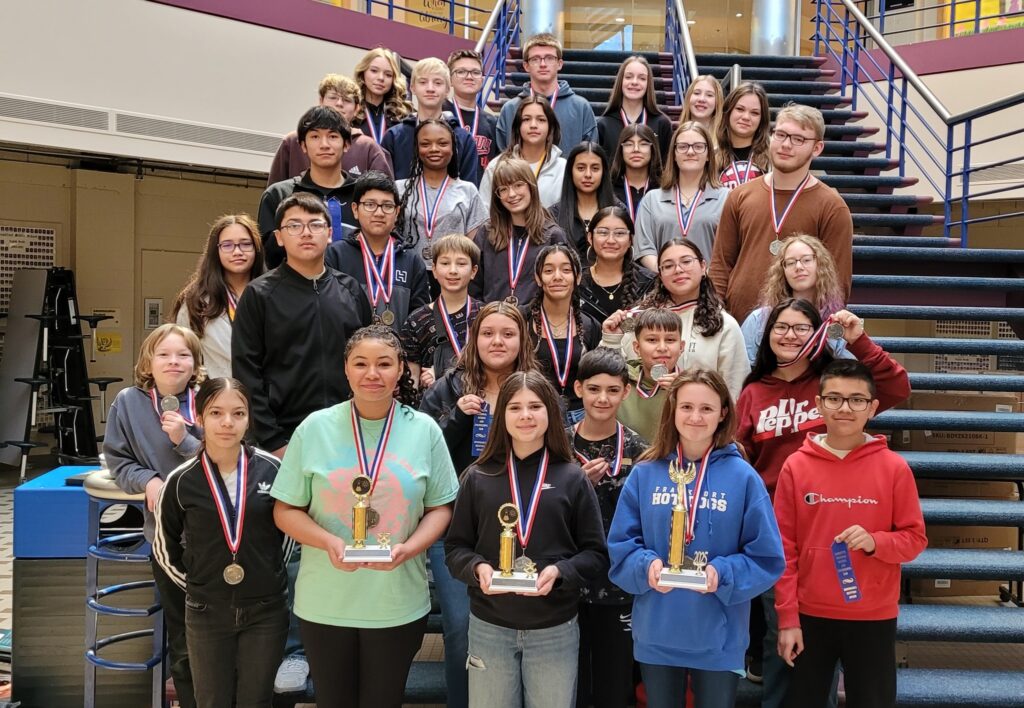
Frankfort students have seen consistent success at the fair over the years thanks to Mr. Rhea’s approach to scientific inquiry. Since 2006, a total of 67 students have qualified for the Indiana State Science Fair. While those results reflect the quality of student work, Rhea said the most meaningful outcomes come from the experience itself. “When you get to the fair and see them nervous, that’s a good thing,” he said. “It means they care. They want to do a good job.” Rhea said students take pride in presenting work they understand and feel ownership over, especially after working through challenges along the way. “When something turns out differently than expected, that opens the door for some really good conversations,” he said. “They learn from it and don’t feel like they failed by being wrong at the beginning. You shatter the idea of having to be correct every time to find success in the scientific process.” He added that the process helps students develop skills that extend well beyond science fairs, like how to think through problems, reflect on results, and explain their reasoning with logical thinking.
As students head into this year’s fair on March 6, their projects will reflect all of the time they have spent thinking, testing, and revising. Many ideas look different now than they did in the fall when they were just an idea or a general interest, and that change is part of the process. By the time students present their work, they understand it well and have taken away valuable conceptual understanding and critical thinking skills. “The kids work hard to get to this stage, so it always comes together one way or another,” Rhea said.
Special thanks to CSF High-Ability Director Bret Rhea for contributing to this article.