
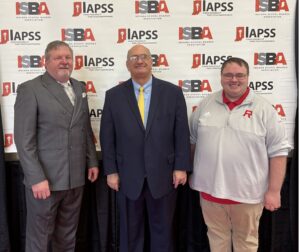
 Rossville Consolidated School District leaders brought a message of transparency, student recognition, and intentional storytelling to the 77th Annual ISBA/IAPSS Fall Conference, sharing how schools can strengthen community connections by making their successes more visible.
Superintendent Dr. Jim Hanna, Board President Joe Hufford and Director of Technology Dustin Shadbolt presented “Changing the Narrative: Strategic Public Relations to Elevate the Good News in Public Education.” Their session explored Rossville’s shift from reactive communication to consistent, purposeful outreach.
Hosted by the Indiana School Boards Association and the Indiana Association of Public School Superintendents, the conference took place October 5–6 at the Indiana Convention Center in Indianapolis. This year’s theme, “Change Doesn’t Wait,” emphasized practical strategies, fresh perspectives, and connections to help school leaders respond to a rapidly changing educational environment. The program included general sessions, educational clinics, and keynote presentations.
The Rossville presentation focused on a challenge facing public schools: ensuring that communities hear about the meaningful work happening in classrooms, programs, and extracurricular activities every day.
The presenters explained that communication shapes how families, prospective employees, and community partners understand a district. When schools communicate primarily during weather closures, emergencies, or controversy, everyday accomplishments can receive less attention.
Rossville’s approach places students and staff at the center of its storytelling. The presentation highlighted student achievement, school safety initiatives, district programs, and the people whose efforts contribute to school pride.
One guiding principle appeared prominently in the presentation: “If It Matters Inside the School, It Should Matter Outside the School.”
The team emphasized that effective communication begins with making storytelling a shared responsibility throughout the school community. Shared photo folders, reminders to contribute good news, and clear staff expectations help bring classroom achievements and school activities to public attention. Teachers, coaches, principals, support staff, students, parents, and board members each contribute a valuable perspective, helping districts recognize accomplishments that might otherwise go unnoticed.
Another focus was making school board information more accessible. Rossville’s presentation described using board meeting PowerPoints as the foundation for public communication, supported by livestreaming, handouts, and articles distributed to media, parents, and staff.
The presenters also discussed using artificial intelligence tools, including ChatGPT, to help turn board presentation material into draft articles and press releases. They presented this approach as a way to extend the reach of information already prepared for public meetings.
Throughout the session, the team connected communication with leadership responsibilities. Their presentation emphasized timely information, consistent messaging, visible leaders, and regular recognition of students and employees.
By sharing its practices at the statewide conference, Rossville offered fellow school leaders concrete examples of how a rural district can bring greater attention to its schools while keeping its community informed.
The presentation closed with a challenge to school leaders: tell positive stories regularly, empower staff to share successes, remain visible, and celebrate students.