Clinton County’s jail addiction-treatment program is helping participants prepare for life beyond incarceration while county officials work to maintain funding, Sheriff Brendon Bright and JCAP coordinator Jamie Bolinger said Friday morning on WILO’s “Party Line.”
The guests discussed the Jail Chemical Addiction Program, hiring, officer wellness and the responsibilities of a sheriff’s office that extend beyond patrol duties.

Bolinger said JCAP combines substance-use treatment and mental-health programming during a course lasting at least 90 days. Clinton County introduced the program in 2022, he said.
Participants work on issues including trauma, anger and decision-making. Bolinger said programming includes canine-assisted therapy and Seeking Safety, which addresses trauma-related concerns.
The goal is to help participants understand what contributed to their substance use and develop healthier ways to respond, he said. That includes encouraging them to see themselves as people rather than defining themselves by their incarceration or addiction.
“You’re a human being that made a mistake,” Bolinger said.
Admission involves an application and committee review. Bolinger said the committee includes the sheriff, chief deputy, representatives from the prosecutor’s office, community corrections and probation, mental-health personnel and jail command staff. He does not vote on admissions, he said.

Participants remain in a dedicated JCAP housing area after graduation rather than returning to the jail’s general population, Bolinger said. Providing that space, along with funding and administrative support, can present challenges for counties considering the program.
Bolinger said Clinton County commissioners and County Council members have agreed to fund the program locally following the loss of state support. He also cited a local bank donation and potential grant opportunities as additional resources.
To illustrate the program’s impact, Bolinger described a former participant who completed JCAP before going to Putnamville, where he earned a welding credential through Ivy Tech.
Bolinger said he stayed in contact with the man and attended his graduation. After release, the man found work welding on wind turbines, paid overdue child support and regained his driver’s license for the first time in 29 years, according to Bolinger.
The man, now 41, had also just completed probation and was no longer under supervision, Bolinger said.
“That’s why I do this,” he said.
Staffing, Security Assessment, Costs of Maintaining the Department
Bright, meanwhile, described a department responsible for jail operations, patrol, civil process and court security.
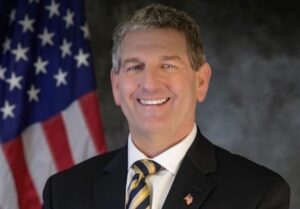
“Most people just think the sheriff’s office is a police department,” Bright said. Traffic enforcement, he added, is “such a small part of the job.”
Bright said the U.S. Marshals had conducted a security assessment the previous day at the county annex, where courts are temporarily operating. He emphasized cooperation with agencies ranging from town marshals to city police, Indiana State Police and federal authorities.
Staffing remains an ongoing process. Bright said the department received close to 20 applications for three jail officer positions and was also working to hire three deputies.
Although working in the jail is not a prerequisite for becoming a deputy, Bright said it is a common progression. Moving employees into patrol positions can create additional jail vacancies.
Retaining those employees matters because preparing a new officer involves substantial investments in equipment and training, he said. Beyond salary and benefits, costs include patrol vehicles, ballistic vests, weapons, Tasers and other equipment.
Bright said training a new police officer can take nine to 12 months, including a 16-week academy.
Officer mental health is another priority. Bright said the department can arrange debriefings and support services after critical incidents, with dispatchers, emergency medical personnel and firefighters included when involved.
He contrasted that approach with the expectation earlier in his career that officers simply move on after difficult calls.
The department currently has one canine unit, Bright said. He is open to adding another when an interested officer is available, while noting that city police canine teams can assist.
For equipment overall, Bright said his immediate concern is maintaining existing capabilities, including body cameras, vehicle cameras, drones, computers and weapons.
“You just want to keep that level to what it’s at and not go backwards,” he said.