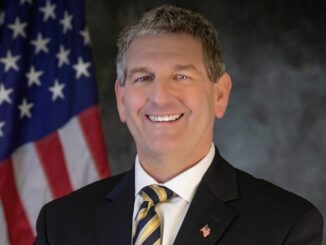
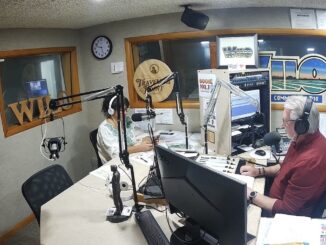
Clinton County Emergency Operations Director and 911 Central Dispatch head Renee Crick is urging residents to add old‑school tools like solar crank and NOAA weather radios to their severe weather plans as spring storm season ramps up in Clinton County. She also announced a free National Weather Service storm spotter training class in Frankfort on Tuesday, March 24, aimed at equipping local residents to better recognize and report dangerous weather.
Severe weather season and local risks
Crick told listeners that as winter gives way to spring, tornadoes and severe thunderstorms become the county’s primary weather concern, even though true tornado events remain relatively rare locally. “Going into springtime now, severe weather, tornadoes, those are our biggest threats,” she said, noting that straight‑line winds and rapidly changing conditions across the flat landscape are more common but still hazardous.
She said last week’s mix of 70‑degree temperatures, rain, sleet, and thunderstorms provided “a kickoff to Severe Weather Preparedness Week,” illustrating how quickly conditions can shift in central Indiana.
Radios and multiple alert methods
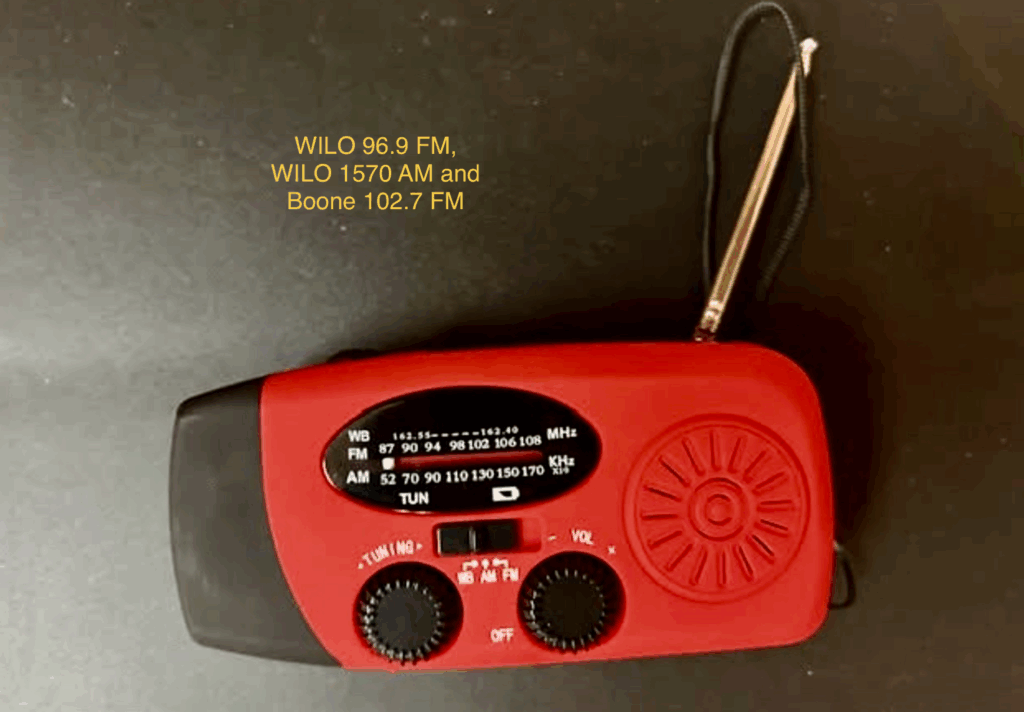
A major theme of Crick’s visit was the need for multiple, redundant ways to receive warnings when storms threaten. She highlighted compact solar crank radios that can operate without commercial power and also charge cell phones. “If we do not have power, if you’re out of power, you have the ability to crank this… it’s an AM/FM radio, it also has a flashlight on it,” Crick explained, adding that the units can also charge via a built‑in solar panel.
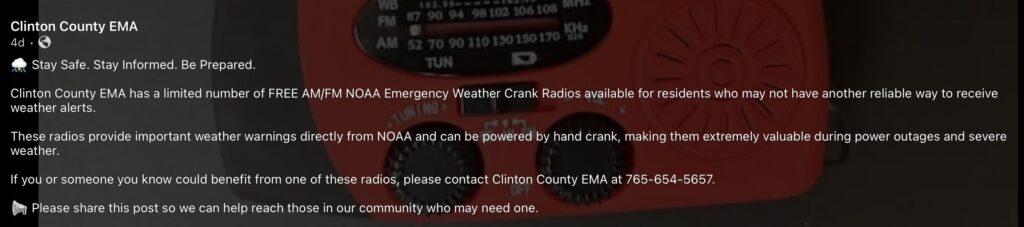
Facebook Statement from EMA:
Publishers Note: WILO 96.9 FM and 1570 AM has won national awards and recognition for its coverage during severe weather events and will continue to do its best to serve you when nature throws us a curve ball. We do our best to link our first responders and area leadership with you during emergency weather events. Kaspar Media maintains three generators and trained personnel and relationships with knowledgeable area responders to enable us to do so.
Crick said Clinton County EMA recently had about 66 of the radios in stock and has already distributed most of them, including one given away during the Party Line program. She also strongly encouraged residents to invest in NOAA weather radios, which can sound alarms even when phones are silenced at night. “You need something to wake you up at night. And it will. It is loud, it will wake you up,” she said, estimating that basic models cost around fifty dollars at large retailers.
Crick cautioned that relying solely on smartphones can be risky during prolonged outages, citing lessons from other states where AM radio became the only working communication channel after storms. She said families should plan ahead to keep at least one device charged and ready during severe weather episodes.
Family, business and personal preparedness
Beyond alerts, Crick urged residents to stock simple supplies that can sustain them if they are stuck at home after ice, wind, or flooding. She recommended keeping candles, water, and non‑perishable food such as granola bars on hand, recalling Clinton County’s experience during the 1991 ice storm. “You just never know… if you’re stuck in your home, you need to have those things in place ahead of time,” she said.

She stressed that preparedness planning should extend beyond homes to local workplaces. “Businesses… need to have things in place so that their employees know what to do in the event of an emergency,” Crick said. Families, especially those with children, should practice what to do during warnings, just as schools run regular drills. Crick noted one example of a local family that keeps a fully stocked “go bag” and a crank radio ready for a teenager who spends time working on a farm.
Behind the scenes at Central Dispatch
Crick, who has worked in public safety since the early 1990s and now serves in a dual role as Emergency Operations Director and Central Dispatch director, also described the training and emotional demands on local 911 dispatchers. She said dispatchers are certified in emergency medical, fire service, and law enforcement dispatching and routinely provide CPR and other life‑saving instructions over the phone before responders arrive. “We have to give CPR instructions a lot,” she said. “Whether we are giving the CPR instructions or talking someone through a seizure… we do that frequently.”
Crick said it “takes a special person” to handle those calls, especially in a small county where dispatchers may know the caller or the person in distress. She said shift teams support each other after difficult calls, and the county offers free mental health resources. During emergencies, she said, dispatchers often operate on “autopilot,” with the emotional impact arriving only after the call ends.
She reported that Central Dispatch is currently fully staffed with 17 employees and that improved staffing has significantly reduced overtime compared to recent years, easing the strain of 12‑hour shifts for dispatchers.
New technology and spotting local storms
On the emergency management side, Crick said her office is adding new tools to track storms more precisely over Clinton County. She recently tested and purchased a weather software package called Baron ThreatNet that allows EMA staff and dispatchers to monitor radar, track lightning and set custom alert parameters. She expects it to be especially useful during the county fair, festivals and outdoor sporting events by providing more precise timing for lightning delays and “all clear” calls.
Crick remains in regular contact with the National Weather Service, including conference calls ahead of and during recent storms, and uses those briefings to coordinate with County Highway and the commissioners on whether to issue travel advisories or watches.
To help bring more trained eyes to the field, Crick promoted a free weather spotter class on Tuesday, March 24, from 6 to 8 p.m. at the Frankfort Police Department, led by National Weather Service meteorologists. “Anybody that is interested in learning, you know, help your community… and it’s educational for yourself and your family too,” she said.
Knowing your location when you call 911
Crick closed with practical advice for anyone who might need to dial 911 from the road. She said one of the simplest, most important steps callers can take is to know their location. “Know your address. Know your location,” she said, noting that many drivers rely on GPS and cannot say which highway they are on or in which direction they are traveling. Although newer cell phones usually provide good location data, older phones and rural towers can still pose challenges.
She suggested that parents teach children to identify nearby landmarks and that drivers make a habit of glancing at green highway and mile marker signs. Being able to tell a dispatcher, for example, that an accident is “in front of McDonald’s in Frankfort” can save valuable time. “You don’t have to know the exact address,” Crick said. “But you have to be able to describe it.”