
Clinton County’s Area Board of Zoning Appeals spent much of its June meeting cleaning up past zoning problems and weighing how far rural property owners can push setback rules, ultimately legalizing one long‑running duplex in downtown Rossville while denying a Kirklin resident’s bid to place a large garage just six inches from the street right‑of‑way.
Rossville duplex legalized after years as unapproved two‑family dwelling
Board members unanimously approved a special exception for a two‑unit dwelling at a Main Street property in Rossville that has quietly operated as a duplex for years without required zoning or state approvals.
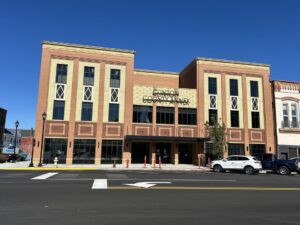
Staff planner Liz Stitzel told the board the house, built around 1900, was converted from a single‑family residence into a video rental store in 2009, with an upstairs apartment added later that year. At some point, she said, “the lower level was illegally converted into a separate residential unit from the unit upstairs rather than being recombined to be a single‑family dwelling again,” leaving two apartments in a building still taxed as a single‑family home.
Current owner and applicant Kenneth Cree bought the property as a two‑family dwelling and was unaware of the zoning history until he asked for a second mailing address, triggering staff’s review. Stitzel said no complaints had been recorded about the two units and noted Rossville Town Council voted unanimously May 19 to support his request to “legalize the structure as a two‑family residential dwelling.”
Board members praised Cree for bringing the issue forward. “I appreciate him coming forward and getting it done the right way,” one member said, adding that Cree “didn’t know that it was done that way to begin with.”
On a 4–0 vote, the board approved the special exception with two conditions: the building must pass a walk‑through by the county inspector for residential and life‑safety codes, and the state must either approve the change of use or formally waive review, with documentation required. The approval also caps the site at “only…two residential units in the structure,” with no commercial use or additional apartments.
After the vote, the chair told Cree he could work with staff to schedule inspections and state review. “You’ll be able to move forward towards resolving this,” she said.
Kirklin front‑yard garage request denied
In one of the evening’s most detailed debates, the board rejected a Kirklin homeowner’s request to build a 1,152‑square‑foot garage just half a foot from the North Illinois Street right‑of‑way, far inside the town’s 15‑foot front setback.
Petitioner Garrett Owens argued his plan should be approved because many structures in town sit closer than 15 feet to the street, and because moving the garage back would interfere with a carefully planned yard filled with mature and specialty trees. He told the board the project had unanimous favorable recommendation from the Kirklin Town Council and said he was “surprised” by a staff report recommending denial.
Owens criticized staff’s description of the building as a “very large pole barn,” calling the term “a colloquial folk term…with an agricultural connotation” he never used. He said he was proposing a garage built with post‑frame wood construction and insisted he had no intention of creating an apartment or animal facility. “I never at any point…suggested that I wanted to have an apartment or anything of that nature,” he said.
Stitzel responded that staff routinely permits metal‑skinned, post‑frame buildings in towns and did not intend to label the project agricultural. “If the petitioner would prefer that it be called a garage, we can go with that,” she said, adding that the main concern was the “permanent structure” and its proximity to the street.
The planner presented a block‑by‑block analysis of Illinois Street showing that while some homes are legal non‑conforming and closer than 10 feet, many others meet or exceed the 15‑foot standard, which was reduced in 2015 from 25 feet after an inventory of housing in Kirklin. By staff’s count, about 32 percent of homes along Illinois sit significantly closer than the current setback, 32 percent are near or just beyond 15 feet, and about 35 percent are well beyond it.
Stitzel said state law requires a variance to be based on a practical difficulty that cannot be resolved by ordinary means, and she did not find one in Owens’ case. He cited the cost and ecological value of his trees, including a rare Indiana yellowwood he described as “of rare ecological significance” and treated by Indiana DNR as infrastructure, but staff concluded those were self‑created conditions rather than a physical constraint.
“The petitioner placing the trees in a location that will now be too close to the structure is a difficulty he placed on himself,” Stitzel wrote, noting that smaller buildings or different placement were possible. She also reported discovering a six‑foot fence already installed in the required front yard, where town rules cap height at 42 inches.
Board members commended Owens for his detailed presentation but questioned the six‑inch setback. “I’m hesitant to say that a half a foot is good for a setback,” member Chester Bankes said. Another member later added, “Personally, I don’t feel like it’s the board’s responsibility to negotiate setbacks. There’s a clear ordinance in place.”
The board considered whether a partial variance might be appropriate, with informal discussion around distances such as 6 to 8 feet from the right‑of‑way, but ultimately took no alternative proposal. On a 4–0 roll‑call vote, members denied the variance “as requested,” relying on the findings in the staff report. Stitzel told Owens he may return with a redesigned site plan and a different setback request without waiting, but cannot immediately refile the same six‑inch proposal.
Veterinary annex and housing near Scircleville church approved
In other action, the board unanimously backed plans to convert a former church south of Scircleville into an annex of Frankfort Animal Hospital, with a basement clinic focused on show pigs and an upstairs apartment for veterinary students and interns.
Veterinarian Kurt Strueh, who has owned Frankfort Animal Hospital for 24 years, said the basement space would handle surgeries on “show pigs”, while the apartment would house externs from Purdue and other schools whose students spend extended rotations in clinics. “We’re not really starting a new business per se,” he said. “Basically just making an annex.”
Stitzel recommended approval, noting the agriculturally zoned site on State Road 28 already has a long‑standing commercial church building and lies among farm fields and the Scott Scircleville Cemetery. She said the proposal fits comprehensive plan goals to support agribusiness, reuse existing structures and “enhance the appearance of major corridors.”
Conditions on the clinic include meeting all local and state building codes, soundproofing as required for veterinary facilities, securing approvals or waivers from the county health department, animal control and INDOT for the driveway access, and installing required landscaping. The apartment approval is limited to one residential unit, subject to state design release and septic review.
A representative of the cemetery association raised concerns about a long‑used shared driveway being blocked, citing a prior incident during an earlier illegal residential conversion. Stitzel recommended adding a condition that the applicant must “work with the cemetery to maintain their access,” and the board incorporated that into its approval.
Board members said they were pleased to see the vacant church reused. “It’s nice to see a structure being used again legally,” one member said, noting that older churches can be “very problematic to find new reasonable uses for.”
Two new rural homes west of Edna Mills cleared to advance
The board also approved a special exception allowing two additional single‑family homes on a 22‑acre agricultural tract on County Road 1000 North in Ross Township, a site already containing one house and significant wetlands.
An attending representative of BML Properties, said the owner wants to start building more homes in the county, with this project as “the first two he’s going to start with.” The board had previously heard the request and tabled it until drainage concerns could be resolved; Stitzel reported the county drainage board approved a solution on April 21.
The planner said the land is only partly farmed, appears to be used mainly as hay, and includes a large wet area that “already seems to present challenges for agricultural equipment.” She pointed to the comprehensive plan’s Ross Township map, which allows limited rural residential development east of Edna Mills near State Road 26, and concluded that two five‑acre lots would not significantly harm agriculture or nearby confined feeding operations.
One neighboring landowner told the board he worried about losing “country living” character if four or five homes clustered together on the lane. “It just seems that adding two more homes to this area is just going to make it more congested,” he said.
Stitzel explained that in Clinton County, most rural splits require formal subdivision review with agricultural protection covenants, even when lots are five or ten acres, to limit future homeowners’ ability to sue surrounding farm operations over dust, noise or odors. She said the proposal fits the one‑home‑per‑20‑acres density target when surrounding farm fields are counted.
On a 4–0 vote the board approved the two additional homes, with the understanding that a three‑lot major subdivision—with a shared 50‑foot right‑of‑way access and defined drainage outlets—must be designed and approved by the Plan Commission before any building permits can be issued.
The complete meeting is available on the Clinton County Government YouTube Channel.