
The debate on the addition of a shot clock to Indiana high school basketball has been ongoing for several years. On May 4, the Indiana High School Athletic Association board of directors will vote on a proposal to add a 35-second shot clock to varsity games.
If approved, the rule will be implemented for the 2028-2029 season.
The National Federation of High School Sports approved state adoption of a shot clock in 2022, but does not mandate it.
Indiana would mark the 33rd state to use a shot clock at the high school level. Alabama became the latest to institute the shot clock, approving the proposal last week.
The most notable concerns are the costs of installation and the additional personnel needed to run the clock at every game.
Cost of installation ranges between $3000-$10000.
While some schools have preemptively installed shot clocks in their main gym, a majority of high schools in Indiana do not have them installed, according to a survey by the IHSAA.
“Clinton Central has already planned ahead for this and already has shot clocks in our main gym,” Clinton Central athletic director and boys basketball coach Nicholas Burlingame said.
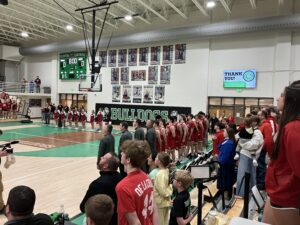
Other concerns include how it affects the style of play.
Rossville boys basketball coach Cory Dunn said he hopes Indiana does not add a shot clock and that it will negatively impact offense and offensive strategies.
“What people don’t think about is how bad the shots will be if we add it,” Dunn said. “Once a shot clock gets to ten seconds, it will be a lot of isolation and forced shots.”
Those in favor of a shot clock argue it would help player development and improve the pace of play.
“I believe from a coaching standpoint and player development standpoint, having a shot clock would be a good idea,” Burlingame said. “However, from a cost perspective, I can see why schools would be against it.”
Implementing a 35-second shot clock would eliminate the use of a stall offense.
Most notably, Crown Point utilized this strategy in the 2026 4A State Championship game against Mt. Vernon, holding the ball for several minutes in the fourth quarter.
The strategy backfired as Mt. Vernon was able to rally from down 10 and win 52-50.
If the proposal is not accepted this year, IHSAA Commissioner Paul Neidig said it would likely come up again in 2028.