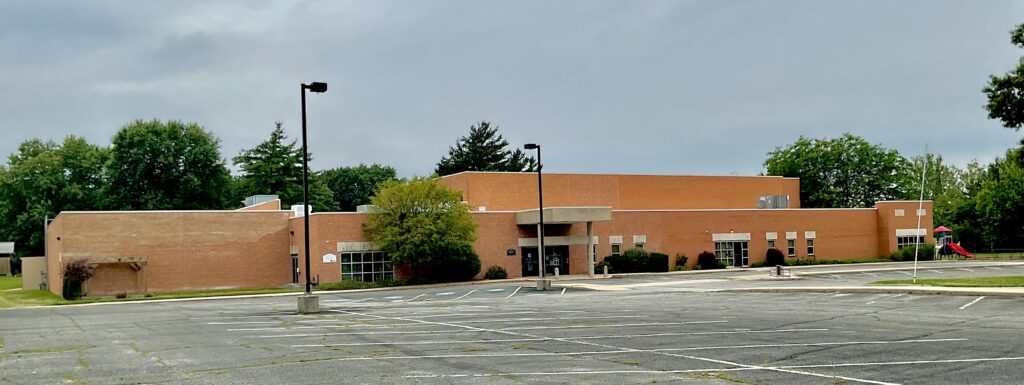
FRANKFORT, IN Clinton County Economic Advancement Foundation (CCEAF) has purchased the former Clinton County Family YMCA building at 950 S. Maish Road in Frankfort, ensuring the longtime community facility can continue to be used for its original mission of health, recreation and child care.
Local nonprofit steps in
CCEAF closed on the YMCA Building property on Friday, June 26, 2026 acquiring the building and grounds from CORE Community Center, Inc. at Momentum Title Agency office in Frankfort. The law firm Ryan, Moore, Cook, Triplett & Albertson LLP assisted in the transfer.
The facility, widely known locally as the YMCA building, was recently appraised at approximately $2 million and will remain pledged to community use under the foundation’s ownership.
Preserving a community-built asset
CCEAF President Stan Smith said the foundation’s board viewed the property as a major community asset that had been built entirely through private pledges rather than tax dollars or government grants. “It was truly a community asset,” Smith said. “It felt like it needed to be retained, brought back to life and give the community some place to go to meet people, exercise, socialize, etc.” Smith emphasized that CCEAF’s intent is to sustain the original purpose of the building and grounds—offering space for fitness, youth programs and social connection—while working with partners to make the operation financially viable. The building purchase is a critical step in making sure the building continues to be a community asset that fulfills its original purpose.
Closing details and local support
The transaction was finalized at Momentum Title Agency, where several local participants waived fees to support the project. Momentum Title waived its standard closing charges, and The Farmers Bank did not assess loan fees beyond third-party costs such as appraisal, environmental review and flood certification, reducing expenses for the nonprofit buyer. The law firm Ryan, Moore, Cook, Triplett & Albertson LLP and Miriam Robeson, Attorney at Law in Flora supplied legal advice.
CCEAF is assuming a loan with The Farmers Bank in the amount of about $145,380 matched to the payment terms previously used by Core Community Center.
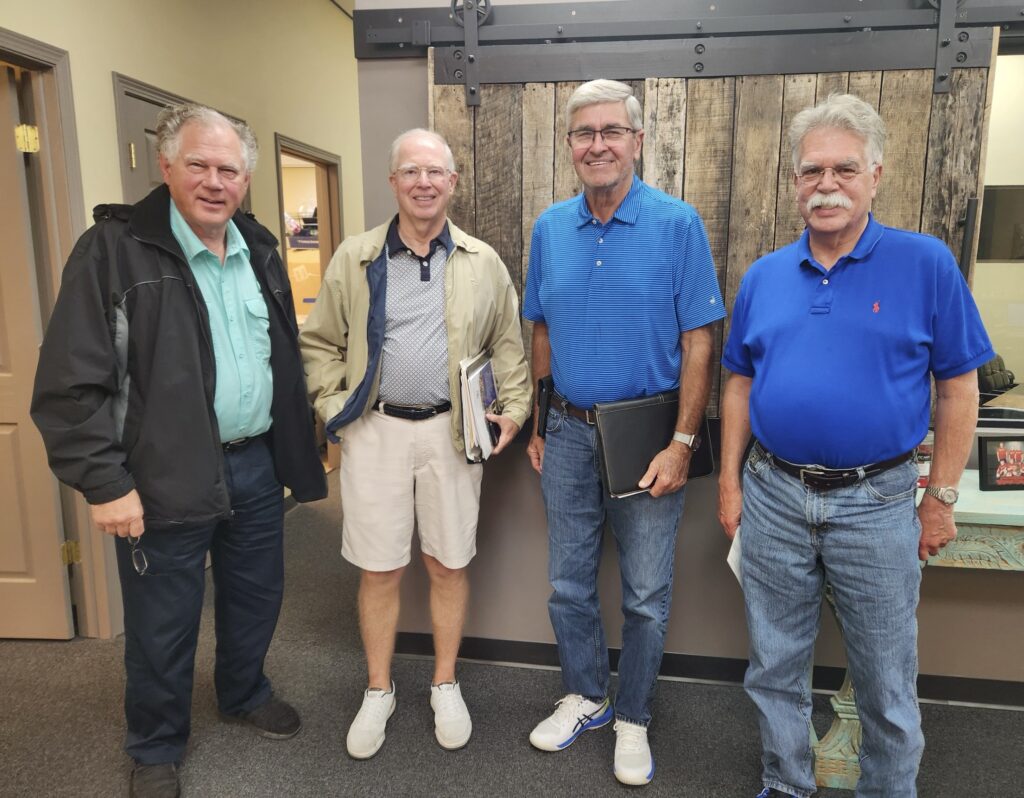
Present at the closing were CCEAF President Stan Smith, CCEAF Vice President Russ Kaspar, commercial manager Ana Hernandez of Momentum Title, former CORE President Craig Mundell, CPA Joe Catron and Susan Ruch, representing The Farmers Bank.
The 950 S. Maish Road building, which opened as a YMCA in 1991, sits near Frankfort’s schools and residential neighborhoods and has long been recognized as a convenient location for recreation and child care services.
From CORE to CCEAF
Core Community Center, Inc. took over operations at the property in 2023 after the YMCA closed, but CORE eventually shut down amid financial pressures. Mundell, who served as CORE’s president for a little over a year, said the closing represents both an end and a new beginning. “I’m pleased that a local entity, being the Clinton County Economic Advancement Foundation, is going to be taking this over and moving forward with it,” Mundell said. “I’m glad that this is going to be something that will be open again to the community. I know it’s so needed and it was so missed once it closed down.”

Mundell also confirmed when asked, if he personally advanced more than $100,000 without any guarantee of repayment to help keep the building and its programming intact during CORE’s operation. He described that step as an effort to “save face from an economic standpoint for the organization and also to take care of a commitment from the work that we had done to the building.”
Demonstrated community demand
Before committing to purchase the property, CCEAF commissioned a feasibility study from a nonprofit consultant based in Atlanta that specializes in YMCA and community-center operations. Smith said the analysis examined population radius, competing facilities, income and education levels, alternative sites, demand, willingness to maintain memberships and concluded that the existing 950 S. Maish Road location remains well-suited and the most popular place to serve local residents. “It came back overwhelmingly that there is a need and it can be supported by membership,” Smith said, noting that the study found the building’s proximity to schools and neighborhoods to be an asset.
Mundell said past operations showed strong interest when the facility was open. “I think there’s a huge demand for it. I hear it all the time from people who say how much they miss it,” he said. “Not only from a physical exercise component, but also the social component. People miss seeing people on an everyday basis. It became a part of their weekly routine and lifestyle.” At its peak, Mundell estimated, the facility had roughly 800 memberships, including family memberships, translating into many more individuals passing through the doors.
Financial structure and safeguards
Under the new arrangement, CCEAF is assuming existing mortgages and an assignment of rents tied to the property, with a replacement note structured over seven and a half years and a balloon payment scheduled for January 26, 2034. The note carries a fixed interest rate comparable to what CORE was paying and includes 12 months of interest-only payments to allow time for programming to resume before principal payments begin. The building, property and non-leased equipment serve as collateral, with updated security agreements and insurance requirements to keep the property protected.
During the closing, participants discussed a recently filed state tax warrant related to Core’s payroll accounts, which CCEAF and its advisors plan to address through amended filings and potential refunds. Title representatives said the warrant and other assessments were accounted for at closing so that CCEAF would take ownership with clear title, aside from routine ditch assessments that will continue to be paid annually.
Next steps for the facility
While no outside operating partner is formally attached to the project at this time, Smith said the CCEAF board is moving ahead with plans to ensure the building’s original intent is sustained. A key early initiative will be a detailed study of the indoor pool by Newman Pools of Michigan, including filling the pool, replacing equipment and inspecting structural elements to determine viability for future use. “It’s an important piece of the puzzle,” Smith said. “The study said we get a lot more memberships if we have a pool.”
Board members and advisors also noted strong local interest in restoring licensed child care and youth activities at the site, along with fitness and adult programming. Smith said CCEAF expects to seek community partners to help “promote it” and sustain operations over time, viewing the facility as an important “third place” where residents can gather beyond home and work.