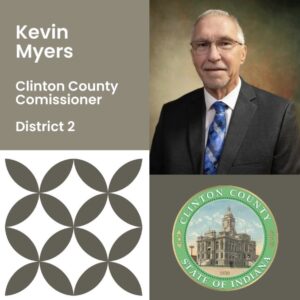
Clinton County Commissioner Kevin Myers says the controversial artificial intelligence data center proposal before county commissioners is off the table for now, but broader questions about growth, taxation and local control are just beginning.
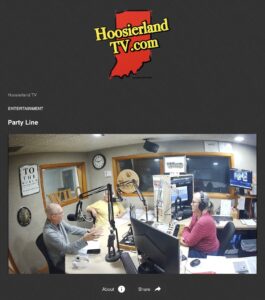
Myers appeared on WILO and Boone 102.7 FM’s Party Line talk show with 3 phone lines open for calls. Myers fielded questions and concerns from callers and hosts Cindy Loveless and Melissa Miller.
Data center proposal paused, city now in lead
Myers told listeners the county-level rezoning request for the proposed data center has been tabled for 12 months, limiting what commissioners can act on in the near term.
On January 20th, all three commissioners unanimously denied a rezoning request connected to a proposed data center in Clinton County. “They can come back as is, the same proposal, in a year,” he said, noting that a different configuration “could come back at any time” under a new filing. He added that for now the matter has largely shifted away from the county. “As far as our part in it right now…this is all in the city’s court right now,” Myers said, pointing to about 114–115 acres already zoned in the city that would still need to go through the planning commission and “due process.”
Myers defended the commission’s handling of the issue, saying members tried to balance strong opinions on both sides and work through negotiations that could not be conducted entirely in public. “I’ll stand by my position all day long that we took our time and looked [at] all this,” he said. He also acknowledged, “I just don’t think enough attention was paid to the property owners and surrounding property owners…they’re the ones that would be the most affected.”
Watching other data centers, weighing growth
Myers said he has spent the last seven or eight months studying how other communities are dealing with large data centers, including site visits and reviewing online meetings. He referenced concerns raised around projects in Indiana, where residents near a Google data center have reported higher utility bills and questioned whether corporate promises to absorb added costs will be fulfilled.
“You want economic growth and you want jobs brought in,” Myers said, but noted Clinton County’s unemployment is relatively low and large job pledges raise questions about where workers will come from. He also said rapidly evolving rules and technology add complexity, including federal discussions about requiring data centers to provide their own power, which he warned could trigger new local debates if it involved facilities such as small nuclear plants. “It’s messed up,” Myers said of the pace of change, while stressing that data centers are “part of the future and we need them” if projects are structured in a way that supports “true economic growth for a community.”
SB 1, tax changes and local services
Looking ahead, Myers pointed to statewide property tax changes under Senate Bill 1 as a major pressure point for county budgets. The bill, approved this year by state lawmakers, is designed to deliver significant property tax relief to homeowners over the next several years, but it also shrinks local tax bases and forces counties to consider either service cuts or higher local income taxes to fill gaps.
“They say on paper…property taxes are going to go down somewhat,” Myers said. “If that’s the case, then something has to give. You either have to make up for that loss of revenue through income tax, or you have to cut services, one or the other.” He singled out law enforcement, EMS, fire protection, roads and bridges, and local schools as areas that could feel those impacts. “I would rather have the assurance that if I need an ambulance…they’re going to be there pretty quick,” he said, questioning whether a few hundred dollars in annual tax savings is worth slower response times or staffing cuts.
Myers also criticized other recent state moves that he believes erode local control, pointing to legislation such as Senate Bill 270 and earlier proposals to change how county offices are selected. He argued that county government, while sometimes slow, has strong checks and balances. “You take more local control away,” he said, adding that he believes “county government is…harder for corruption to happen” because more people are involved in day‑to‑day oversight.
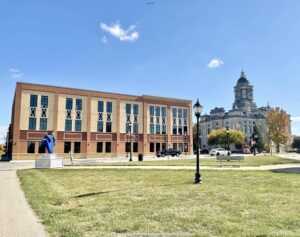
Courthouse and annex work continue
Beyond policy debates, Myers updated listeners on ongoing county building projects. He said staff had begun to settle into the new county building when a frozen pipe caused significant water damage, forcing temporary relocations while carpet, drywall and environmental issues are addressed. “It’s been a headache,” Myers admitted, but said there is “light at the end of the tunnel” as repairs move forward.

Renovation work has also started at the historic courthouse, where crews are addressing asbestos, lead paint and other environmental concerns before major interior construction. Myers said the county is pleased with the on‑site project engineer and communication so far and expressed confidence the work is now “heading in the right direction” after earlier construction issues on the annex project.
Chamber funding, conflict‑of‑interest concern
Responding to a caller, Myers said he views county funding for the local chamber of commerce as “a vital part of what we do” to support economic vitality and said he would not personally support cutting that appropriation, though all spending will be under review as budgets tighten. He also addressed a question raised at a recent public forum about a potential conflict of interest because his son is a candidate for sheriff.
“The sheriff and the county commissioner are two separate elected officers,” Myers said, emphasizing that voters choose each independently. He said that if his son were elected, he would “follow all the county ethics rules” and would seek guidance from the county attorney if questions arise. He described the concern as “a little bit out of proportion,” but said he wanted to publicly clarify his position.
Myers closed by encouraging residents to stay engaged with local and state officials, fill out legislative surveys, and contact lawmakers as major tax and growth decisions move forward. He said he welcomes hearing from citizens on issues beyond the now‑paused data center proposal and praised county employees and nonprofits for their work across Clinton County.