
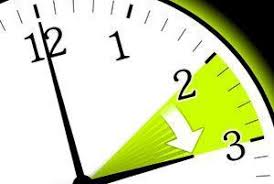
 Everyone needs to get ready as come 2 a.m. Sunday morning, we will officially lose an hour of sleep as Daylight Savings Time officially kicks ofF its eight-month run. What this means is that time springs ahead one hour early Sunday morning or late Saturday night for all you revelers.
Daylight Savings Time will be celebrating its 100th birthday this year as it was first enacted by the federal government on March 19, 1918, during World War I, as a way to conserve coal. Although it was halted nationally later that year, it has persisted in some form at local or state levels for decades before being recognized nationally in 1966 by the Uniform Time Act.
Hawaii and most of Arizona don’t take part in Daylight Savings Time. Other non-observers are American Samoa, Guam, Puerto Rico and the Virgin Islands.
Daylight Savings Time now accounts for about 65 percent of the year. DST will officially end at 2 a.m. on Sunday, November 4.